Health Policy & Regulation
Encore: Why Medicare Advantage Premiums Can Be So Low, and Who Really Pays for It

From the archive: this episode first aired as Value Health Voices' debut, recorded in October 2024. Figures reflect that time.
How can a Medicare Advantage plan charge seniors a $0 premium? Value Health Voices follows the money behind Medicare Advantage, from the federal payments insurers collect to the denials hospitals are pushing back on.
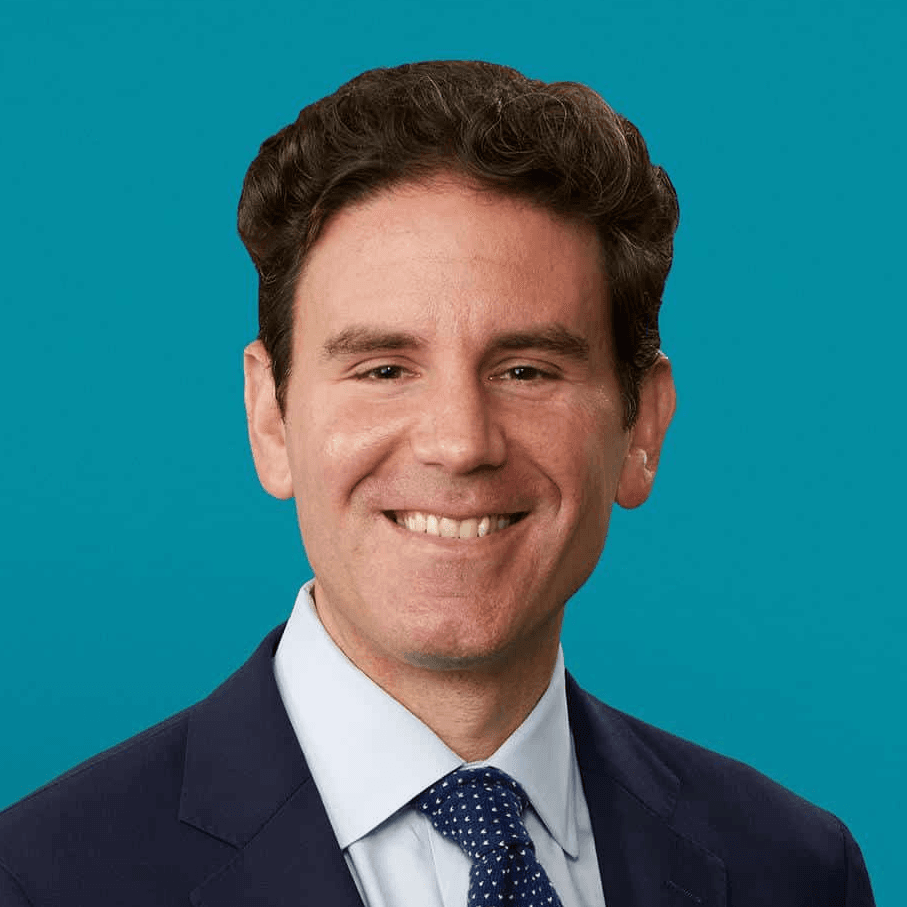
In the show's first episode, re-released here, Dr. Anthony Paravati and Dr. Amar Rewari, both radiation oncologists and physician executives, walk through how Medicare Advantage works and why it has become the more popular choice for seniors in much of the country. They draw on their own work with commercial insurers, payment models and hospital contracting.
They cover how plans keep costs down with narrow networks and utilization management; the three revenue streams that fund the extra benefits, from the benchmark-bid spread to risk adjustment and star-rating bonuses; and what that means in real dollars, with Medicare Advantage margins running about double those of commercial plans. They also weigh which seniors Medicare Advantage suits, and why the new prior authorization rule leaves claim denials and slow payment unresolved.
Resources:
KFF: Medicare Advantage enrollment update and key trends: https://www.kff.org/medicare/medicare-advantage-in-2026-enrollment-update-and-key-trends/
Medicare.gov: Compare Original Medicare and Medicare Advantage: https://www.medicare.gov/basics/get-started-with-medicare/get-more-coverage/your-coverage-options/compare-original-medicare-medicare-advantage
CMS: Interoperability and Prior Authorization Final Rule: https://www.cms.gov/newsroom/fact-sheets/cms-interoperability-and-prior-authorization-final-rule-cms-0057-f
Connect with us:
Website: https://www.valuehealthvoices.com/
Apple Podcasts: https://podcasts.apple.com/us/podcast/value-health-voices/id1777493904
Spotify: https://open.spotify.com/show/0cxnf4Il3QK3cvFFKxwPWL
Instagram: https://www.instagram.com/valuehealthvoices
LinkedIn: https://www.linkedin.com/company/value-health-voices/
Newsletter: https://www.valuehealthvoices.com/newsletter
Introducing Value Health Voices
Dr. Amar Rewari: Let's talk about why is it that the Medicare Advantage premiums can be so low and what's happening behind the scene financially. Let's get into it.
Dr. Anthony Paravati: This is episode one of our new podcast project called Value Health Voices. And so since it's new, we have to introduce ourselves. I'm Dr. Anthony Paravati. I'm a radiation oncologist by training, and I'm a physician executive who oversees cancer center and all its divisions.
Dr. Amar Rewari: And I'm Amar Rewari. I'm also an oncologist by training. And my prior background, I worked in investment banking and also a physician executive now and interested in health policy and economics.
Dr. Anthony Paravati: In fact, yes, both of us have this interest. We've volunteered, oh, a lot over the years in these areas. And so my side has been primarily focused on interacting with the commercial insurance companies who both, of course, operate commercial insurance plans and operate Medicare Advantage plans.
Dr. Amar Rewari: Right. And on my side, it's been more dealing with code development, valuation and new payment models, whether it be bundled health care or others.
Dr. Anthony Paravati: Yes. It's a good combination, I think, of experiences you and I have had to be able to tackle a lot of these very vexing and complicated issues around health care policy and finance, with the goal of making them accessible and easily understandable.
Dr. Amar Rewari: Yes. And I think one of the other goals of this podcast is to help new physicians out of training understand some concepts of health care finance, as well as people still in training and those just looking to learn more.
Dr. Anthony Paravati: That's right. Yes. So it's an ambitious plan. I think we can do it, and so we decided that no better topic to start then would be to have a chat about Medicare and Medicare Advantage. And both of those are options that seniors have for their coverage in the United States. Traditional Medicare is, of course, a traditional option. And then more recently, Medicare Advantage has come on the scene and become very popular, especially in certain geographies around the country, as a cheaper way, at least on a recurring monthly cost basis, a cheaper way for the senior to access care.
Dr. Amar Rewari: Right. And before we get into it even further, I just wanted to make the quick legal disclaimer again that all our opinions are entirely our own and do not represent anyone we work for or any professional society or other third party.
Dr. Anthony Paravati: Yes. What he said. Thank you for doing that.
What is Medicare Advantage?
Dr. Amar Rewari: Appreciate it. Yes. So Anthony, I know you already recorded a little fundamentals of Medicare, but maybe for the listeners, you can just give a quick 30 seconds: what is Medicare Advantage?
Dr. Anthony Paravati: Sure. Medicare Advantage is essentially a subscription that seniors can sign up for with commercial insurance companies. So everyone thinks of Medicare as a government program, and it is, fundamentally. Medicare Advantage is an alternative where the senior can say to UnitedHealthcare, to Cigna, to Humana, although, "I'd like you to administer my health benefits." And so that's what it is.
Dr. Amar Rewari: So why would somebody choose Medicare Advantage over traditional Medicare?
Dr. Anthony Paravati: Yes. And so as you rightly mentioned, we decided to record a kind of a primer episode, or a fundamentals, as we've called it, where we explain the different sections of Medicare. And so if you look at the sections that a senior has to sign up for to have full coverage with traditional Medicare, that implies a fairly significant amount of recurring monthly expenses of premiums that are not low. And so that can be a lot for the average senior to take on. For seniors who want to reduce their monthly expenses for their medical care, they've turned to Medicare Advantage, where premiums can be $0, but the national average premium is $18 currently.
Dr. Amar Rewari: But $0, that's huge. So it really, a lot of people with lower incomes, or who are really on a tight budget and have to really think about those finances seriously, it's a good option for that, Medicare Advantage.
Dr. Anthony Paravati: No, it really is. You know, you see there's a lot of research been done to break down the demographics of who signs up for traditional Medicare, who opts for Medicare Advantage plan. And, you know, the Kaiser Family Foundation has done a nice job with this. And yes, so generally less well-off seniors, seniors who live in urban centers, seniors who, typically more popular with African Americans, with Hispanics. Hispanic seniors, they generally opt for Medicare Advantage, according to the data put out by Kaiser Family Foundation.
How Medicare Advantage plans keep costs low
Dr. Amar Rewari: So Anthony, one of the disadvantages to Medicare Advantage would be that there's less options for individuals to pick different providers in their network, right? And that's one of the ways Medicare Advantage can help keep costs low.
Dr. Anthony Paravati: Right. If you're going to operate an insurance plan for seniors who are going to need, let's face it, they're going to need Medicare sooner or later. So if you're going to operate a plan where, on an out-of-pocket basis, premium basis, it's $18 or $0 or whatever it is, there's got to be a way that you get there. And so one of the ways that the cost is offset to the insurer, to be able to offer a plan like that, is they do narrow networks. So they don't just let the senior who they've signed up go to any hospital or any physician. They have narrow networks because they've pre-negotiated lower costs with that hospital system, with that physician.
That's just one thing. Number two, they use utilization management. So they have guidelines, they have a policy, and these things may be substantially more restrictive than what are in Medicare's coverage description. So Medicare has coverage rules that are national, and the Medicare Advantage plan has to abide by those. But there's also so-called local coverage determinations. And the Medicare Advantage plans, because their jurisdiction is national, they can sort of ignore those things and they can make up their own list.
And so those are the two main mechanisms that they control costs: they negotiate directly for narrow networks, and they use so-called utilization management, which I talked about in the primer episode. Basically, it's industry jargon for "the things that we say are medically necessary are medically necessary, as the insurer; everything else is denied."
Dr. Amar Rewari: Yes. So this is where we come to all the stuff that a lot of doctors deal with, with prior authorizations, with all these plans on that utilization management side, right? So, you're saying, they keep costs down by controlling expenses through negotiating with the networks and utilization management, but also on the revenue side, right? Because they're getting money in fixed payments from the government, and they get more money for sicker patients. They get bonuses for managing it more efficiently and showing quality. And then they also get increased money if they bid low, then they get to pocket that difference as a rebate and use that to kind of defray some of the premium costs, right? So on the revenue side and expense side, they're really managing that effectively.
Benchmarks, bids and extra benefits
Dr. Anthony Paravati: Yes. That's a great kind of overview of it, and probably, I would imagine, those who are tuning in, they'd like us to maybe break it down a little. So, yes, let's go through the categories. On the revenue side, actually, I think it's even better to start with the so-called benchmarking and bids that you were just mentioning.
So in a given part of the country, because it does vary by region, there is a benchmark rate that Medicare sets for the coverage of the seniors. What the commercial insurance company does is it bids to Medicare what the insurance company believes they can spend to cover that senior. And so as you just said, if the bid is less than the benchmark, then a difference that the federal government pays to the commercial insurance company. That difference between the benchmark and the bid that wins, the commercial insurance company pockets that, and they can use that to fund other benefits. So that's the start of it: there's a benchmark rate.
Dr. Amar Rewari: Right.
Dr. Anthony Paravati: Yeah, go ahead.
Dr. Amar Rewari: And this is where the whole dental, vision, all those other benefits can get funded through that.
Dr. Anthony Paravati: Exactly. Through that difference.
Dr. Amar Rewari: Right.
Dr. Anthony Paravati: And why Medicare Advantage has been so much in the news lately is that the federal government has recalculated what it thinks the benchmark should be and decreased that. And so the response has been a number of things. So certain Medicare Advantage providers have said, "Well, we're gonna not offer Medicare Advantage in certain parts of the country anymore. We're gonna cut down on these extra benefits that we offer."
And this is a big problem for Humana in particular, because they are a company that really doubled down. So they basically divested from traditional commercial insurance, put all their eggs in the basket of Medicare Advantage. They have a lot of market share in parts of the country where the benchmarks are being cut, the benchmarks aren't very favorable. So they're basically then going to divest altogether, not only from the commercial, which they already did, but from Medicare Advantage in certain geographies, because the benchmark doesn't allow for them to win on that delta with a lower bid versus the benchmark and then fund the other benefits. So that's one thing.
Dr. Amar Rewari: So with that, are they now, that's why we see more of a trend in medicine for more of these utilization management, right, in the last few years? Could that explain some of it, because they're not getting the same delta in the bidding war?
Dr. Anthony Paravati: I think it has to be, because there's a real attachment on the part of the insurance companies that operate Medicare Advantage plans. There's a real attachment to certain margin objectives that they really want to hit. And essentially, they make the business there because the margins on the Medicare Advantage plans are substantially higher than they are on the commercial plans, which on its face seems so bizarre, right?
Because you think of a younger person, maybe 35 years old, they're employed, they have commercial insurance, fully insured plan through their company. That should be a moneymaker for the commercial insurance company. But it turns out it's kind of not. The Medicare Advantage business was much more attractive. And now we're in this period of readjustment where what the federal government is willing to pay per beneficiary per month is coming down.
Dr. Amar Rewari: And it might be because on the commercial side, also a lot of them are doing aggressive utilization management, right? But they're not getting all these other revenue streams you're talking about, the benchmarking. But the other thing is the HCC, right, and getting paid more for sicker patients. Maybe we could tell a little bit our listeners about that.
Risk adjustment and star ratings
Dr. Anthony Paravati: Yes, I think that's another part of the three drivers of the flow of funds from the government to the commercial. So we talked about the benchmarking and bids. That's number one. Number two is risk adjustment. So Medicare pays a given dollar amount per enrollee per month that's covered by the Medicare Advantage plan. So let's say we're talking about United. United has a beneficiary, and that beneficiary is doing pretty well, doesn't have a lot of conditions. Then the federal government would pay dollar amount X, let's say, $1,000 per month to United to provide the Medicare Advantage coverage for that senior. Well, then another senior, again, another Medicare Advantage enrollee with United, is substantially sicker and has a higher hierarchical condition categorization.
Dr. Amar Rewari: With the HCC, yep.
Dr. Anthony Paravati: Exactly. Hierarchical condition category. And so they have the HCC being higher in that individual reflects the fact that they are sicker, more expensive. And so then Medicare, again, the federal government, will pay, let's say, $1,400 a month or $1,200 a month to United for that senior.
And so risk adjustment is a huge deal, and the Medicare Advantage operators, the commercial insurance companies, basically have teams of staff that are dedicated to, in one way or another, being in contact with the senior and doing whatever they can to justify a refresh of the HCC so that the senior can be sicker on paper.
Dr. Amar Rewari: Right. So which is different than in the commercial side, right? Because they're getting more money for potentially sicker patients, and if they manage the cost well, you know, that's this fixed payment coming into them, so then they can have higher margins out of it, right? And then can you talk about the quality bonuses also? Is that the third tier?
Dr. Anthony Paravati: Sure. Yeah. So the final tier of funds flowing from the federal government to the commercial insurance company is exactly the quality bonuses. And so these are what would have been called star ratings. And so these are built into the payment structure, and they are an incentive. Essentially, the federal government creates categories of performance, and the Medicare Advantage plans that perform well in these various categories, which we won't get into the details of. But let's say there are five quality metrics. And if you perform at the top level and you have five-star rating for your Medicare Advantage plan, then you get quality bonuses from the government.
So they got the risk. They've got the bid-benchmark spread. And then the quality bonuses all make up the revenue side. So there's a lot of opportunity for gaming the system, if you like.
Dr. Amar Rewari: Right. Yeah. Because you're starting with this building block, and then you're adding three additional layers of revenue. And then the cost really is just on the negotiated, cheaper rates, oftentimes, of providers. And then they're not offering all the exact same services. So, results in these higher margins.
Why hospitals are dropping Medicare Advantage
Dr. Anthony Paravati: Exactly. So one of the things we should talk about, and I'm curious your experience practicing, where you are in the country. But in regions of the country where Medicare Advantage is particularly popular. So where I practice, Medicare Advantage is 60%. So it's well over 50% of the seniors' choice is for Medicare Advantage. And so I don't know what it is in your region.
Dr. Amar Rewari: But it's definitely becoming the more popular product out here as well. So.
Dr. Anthony Paravati: Yes. And so it creates, one of the things that exists in the background with Medicare Advantage, and in the push and pull between hospital systems and Medicare Advantage, are things like denial of services and timing of payments. Because it's not for no reason that various hospitals in this country have decided that they're going to go a different way and that they're going to cut their exposure to Medicare Advantage by not contracting with certain Medicare Advantage providers. They've come out and said, "Listen, we signed up for Medicare Advantage, we contracted Medicare Advantage insurers, it's a slow pay and no pay game, and so we are left holding the bag." Have you guys had that pressure, those conversations?
Dr. Amar Rewari: Yes, yes. And because, you know, all the hospitals around here are seeing much higher first claim denials, and we're really working hard on our revenue cycle and revenue management, and these conversations are happening. But also it's competitive pressures in the area, right? We don't want to lose those patients. We want to make sure we service the communities we practice in and are good stewards to that. And so it's not so easy as just being able to drop some of these insurance products, right? You just kind of have to work around it, and that's very difficult in these hospital systems right now, which have very tight budgets and operating margins.
Dr. Anthony Paravati: Yes. I mean, you know, I'll be very honest with you. In my conversations, both internally and externally, with consultants and with people I know at other systems, this is the question that keeps coming up. And I was asked point blank by a senior executive at another hospital system. It was, "Should we cut United? Should we stop contracting with United for Medicare Advantage?" And he brought up a number of reasons why he was asking me that.
And so I obviously said questions back to him about, well, what's the percentage in the market? And what's your percentage Medicare Advantage versus traditional? And what do your commercial contracts look like? You know, what's your percentage of Medicare and Medicaid as a percentage of business relative to commercial? Those kinds of questions tell you, I think, the answer to that. Because everyone's asking the question, and some hospital systems in the country have already answered it, right? So.
Dr. Amar Rewari: Right. Right. And these are the news. So you and I aren't breaking news here, but, you know, in Scripps, Scripps in San Diego...
Dr. Anthony Paravati: I did my residency there. I have no idea what the payer mix is in the San Diego area right now. There's certainly a lot of great payers there. And I guess they felt like they're in a position in the market that they could say, "All right, all Medicare Advantage, we are done."
Dr. Amar Rewari: And they did it. And I think a lot of it also is, I mean, what I'm seeing in this area. So a lot of private, whether it's PE-backed providers or, you know, private practices, they're the ones who are dropping a lot of these products. But it's the community hospitals and the employed physicians there that obviously have to continue to take these products to serve the community. And so it's a vicious cycle, because the hospitals are seeing these patients with the longer times to payment and higher denial rates, while the PE-backed shops are getting the ones with the more consistent revenue stream coming in, right? So it's hurting the hospitals even doubly.
Dr. Anthony Paravati: Sure. Yes. It's a huge issue. But anybody who follows and reads Modern Healthcare, who reads Crain's, who reads Becker's, I mean, you got to actively ignore, if you want to not read about it, the Medicare Advantage tug-of-war between hospital systems. You know, just within the past week, you know, we're recording this in October, on a Sunday. In the week before we recorded this, just another hospital system in the South, which I thought would be in an area where it would be problematic to do what they did, have now cut ties with a major Medicare Advantage provider. And it could be part of negotiations, it will be rectified, but who knows, we'll see.
Why CMS embraced Medicare Advantage
Dr. Amar Rewari: Yes. Yeah. And it kind of makes you, and I think for some of the listeners also, to kind of realize why was this even attractive for CMS to begin with, right? And a lot of it comes down to just having predictability with fixed payments and being able to manage the financial risk more effectively, right? As opposed to being on the hook for all the costs for beneficiaries, they now can just give out these fixed payments, $1,000, $1,200, plus the other tiers of revenue, right?
Dr. Anthony Paravati: Yes. I mean, that's, yeah, if you think about, and I talk about this in the fundamentals episode, if you think about the structure of traditional Medicare, very unusual events have to happen for the federal government to become not at risk to pay for the care for the senior. I mean, they have to have more than 60 days in a row hospitalized, or more than 90 days over their entire, essentially, life of being 65 or older. But until then, yeah, more or less, once the deductible is exceeded, the federal government is on the hook for it.
And while for Part B, while there's a monthly premium that the senior has to pay of $174 currently, there's essentially, so there's the $174 premium, and then there's a 20% coinsurance that the senior has to pay. But that's only 20%. It could be 20% of infinity, in theory. And so the federal government's got to pay 80%.
And so, yes, the federal government became very attracted to the idea of offloading risk from them to the commercial insurance plan. But it was a bit of a miscalculation the way it was put in place, because with all the revenue opportunities that the private insurance companies who operate Medicare Advantage plans have, the per-beneficiary spend that Medicare was paying was higher than they wanted it to be, much higher than originally planned. And hence the...
Dr. Amar Rewari: Ratcheting down the benchmark rate that they're now paying. But they never predicted that, I think they always thought Medicare Advantage would end up being, you know, a smaller portion.
Dr. Anthony Paravati: Right.
Dr. Amar Rewari: As opposed to now exploding.
Who Medicare Advantage is right for
Dr. Amar Rewari: But I did want to kind of segue a little bit into the pros and cons of Medicare Advantage for beneficiaries, because we've talked about it a lot throughout this episode, and just kind of to summarize a little bit. So in my mind, I would think for certain individuals who can afford to pay for Medigap insurance, for example, and really want to have a selection, to be able to pick who's their own doctor, I don't think Medicare Advantage is necessarily, makes the most sense, right? Because if you can pay for that supplemental insurance to cover your deductibles, cover your coinsurance, then you're going to be disadvantaged doing Medicare Advantage.
But I think for people who are really income sensitive, and they don't mind that being not able to pick their doctors, and they're having to, and dealing with delays is secondary to the income, maybe for them Medicare Advantage makes more sense. And what are your thoughts?
Dr. Anthony Paravati: Yeah, I think you laid it out nicely, Amar, in terms of pros and cons conversation. Yeah, we see it in the choices that seniors are making. Those who don't really have so much of a budget constraint, they like the freedom to go to the doctor they want to go to, to know that they have access to whatever the doctor recommends, so long as it's not entirely, sort of, you know, let's say, not covered by Medicare at all, they're going to be able to receive that care.
For the senior who is budget conscious and who does not require a complex medical care of advanced services that are expensive, that are emerging therapies, that senior is in good shape and best served by selecting Medicare Advantage plan. And also perhaps a senior who does need a fair amount of prescription medications. You know, one thing we didn't get into at all is the Medicare Advantage coverage of prescription drugs is usually by a tiered system, a tier one through four, or let's call it A, B, C, D. If that senior needs a lot of prescription drugs, but they're basically drugs that are in tier one and two, it is a great thing for them to have Medicare Advantage, because it's all covered and there's not much in terms of out-of-pocket expense.
If instead, you know, you can imagine a man who, maybe he's 70 years old, he has prostate cancer, he's got either high-risk or metastatic prostate cancer, he needs abiraterone, he needs Lupron, these are tier four drugs. So with his Medicare Advantage plan, he could still be paying thousands monthly for those drugs, right? Just to...
Dr. Amar Rewari: Right. That's a good point.
Dr. Anthony Paravati: Yes. So it really depends on the senior's situation, what the right selection is for them.
What's next for Medicare Advantage
Dr. Amar Rewari: Yes. We can't forget about the drugs. That is very true. And so going forward, what do we think is going to happen here? I mean, because this is not sustainable, right? The margins are now slowly getting tighter for these Medicare Advantage plans. There's pressure on providers to either, like you said, renegotiate these contracts or potentially drop them. CMS is under pressure. So where do we go from here? I mean, this is a pressure cooker waiting to explode.
Dr. Anthony Paravati: It's a great analogy for it. I think we are, for now, going to see nibbling around the edges. We're going to see the benchmark rate that CMS readjusted downward. The cut was like less than 1%. I mean, I think it was 0.16%. I have to go back and fact-check after. But we see nibbling around the edges, gesturing, the typical negotiation-type maneuvers, but I don't think we're going to see any large-scale changes for now.
What I think we will see, coming at this from the perspective of a physician now, we're going to see some improvements in the so-called utilization management and prior authorization part of denials, because the federal government has finalized the rule to place new restrictions on Medicare Advantage...
Dr. Amar Rewari: Which, thank God, because the amount of, yes, you know, the amount of time we spend in these peer-to-peers, and our poor patients who are having these delays to care. That's great news about the legislation.
Dr. Anthony Paravati: Yes. No, it's great that, you know, the rule is coming. There is a bill that was introduced as well that I believe has not been passed. It has not, no, that's correct, has not been passed. It'll likely be reintroduced next year in the new Congress. I think there's bipartisan support for that, so that may come along.
But the issue will remain that neither this rule nor the language in the bill, at least that I've seen, or the last version I've seen, really does anything to impact post-care denials or time to payment. And so that will remain an issue that will cause a lot of heartburn. The hospital systems and physician groups, even after these rules come into full force.
Dr. Amar Rewari: So I liked your term. So it's just going to be nibbling away at the edges for maybe the next few years.
Dr. Anthony Paravati: I think so. I think status quo, status quo.
Medicare Advantage margins in real dollars
Dr. Amar Rewari: Yeah. But, you know, hey, should we talk about some, just to give an idea for the, because one of our missions here is to talk about health care finance, right? And if you want to talk about health care finance, we got to talk about real dollars and cents.
Dr. Anthony Paravati: Oh, yeah, yeah. Let's put some numbers around it. Yeah. So why don't you start, why don't you explain, if you recall, typical, let's say, margins of commercial insurance. So now forgetting Medicare for a second, we're talking about typical fully insured plan, 40-year-old, I don't know, accountant who works for a major accounting firm. What is the...
Dr. Amar Rewari: From, when I was doing the research for this episode, I think the most recent numbers were around 2% to 3% margins, right?
Dr. Anthony Paravati: Yeah.
Dr. Amar Rewari: And that's almost half the margins that these Medicare Advantage plans are seeing.
Dr. Anthony Paravati: Right. So, you know, in the heyday of Medicare Advantage, before any of these recent adjustments, during COVID, for example, when there was quite little care being consumed, if we can put it in those terms. Not as much care being provided, let's say, elective care. You're talking about margins up to 10%. Yeah. More typically in the neighborhood of 4% to 6%.
So what does that mean? So if the federal government is paying on a monthly basis a per member per month payment from the federal government's treasury to the commercial insurance provider of the Medicare Advantage plan of $1,000 to $1,200, let's say, just as an example, because those are pretty typical per member per month payments, then you're talking about, if you got a 6% margin, you're talking about $60, $72. And on the commercial side, again, just that theoretical 40-year-old accountant, you're talking about $12, maybe $18. So the difference between $18, a 3% margin, versus $72 a month at a 6% margin on a $1,200 payment, I mean, that's huge. You can see why Humana in particular basically fell for it. They put all the business into one line of business because they were chasing that 5%, 6%, even higher margin.
Dr. Amar Rewari: Well, you can see the frustration with the providers and the hospitals, knowing that these margins are there, and they're having to have so much difficulty cutting clinical staff and programs, when these insurers are getting these margins off of them.
Dr. Anthony Paravati: Yes. It's true. And, you know, it's been interesting to see these margins on the insurance side balloon up a little bit before COVID, but especially during COVID. And now we have the situation of the pendulum swinging away from them, because a lot of elective care, sort of the classic pent-up demand situation. So a lot of elective care was provided and consumed in 2023, 2024. And then Medicare readjusting the benchmark rate down has really eroded into the margins that the commercial insurance companies make in Medicare Advantage. And hence all this sort of histrionics: "We're going to cut the dental, we're going to cut this market," all this stuff.
So that's the situation we're in right now. That's the current sort of 360 view of the interaction between hospital systems and Medicare. And so the question is, if it becomes less attractive to be a beneficiary who signs up for Medicare Advantage, will people still back into traditional Medicare? I think that remains to be seen.
Dr. Amar Rewari: Yes. I mean, if the premium slowly start rising again, maybe the pendulum will shift back.
Dr. Anthony Paravati: We'll see.
Dr. Amar Rewari: But for now, I think we call an episode. And what do you think? We covered it all?
Dr. Anthony Paravati: Yes. Yep.
Dr. Amar Rewari: Sounds good.
Dr. Anthony Paravati: All right.