Health Policy & Regulation
Paying More, Getting Less: Joel White's Five Fixes for America's Broken Health Care Market

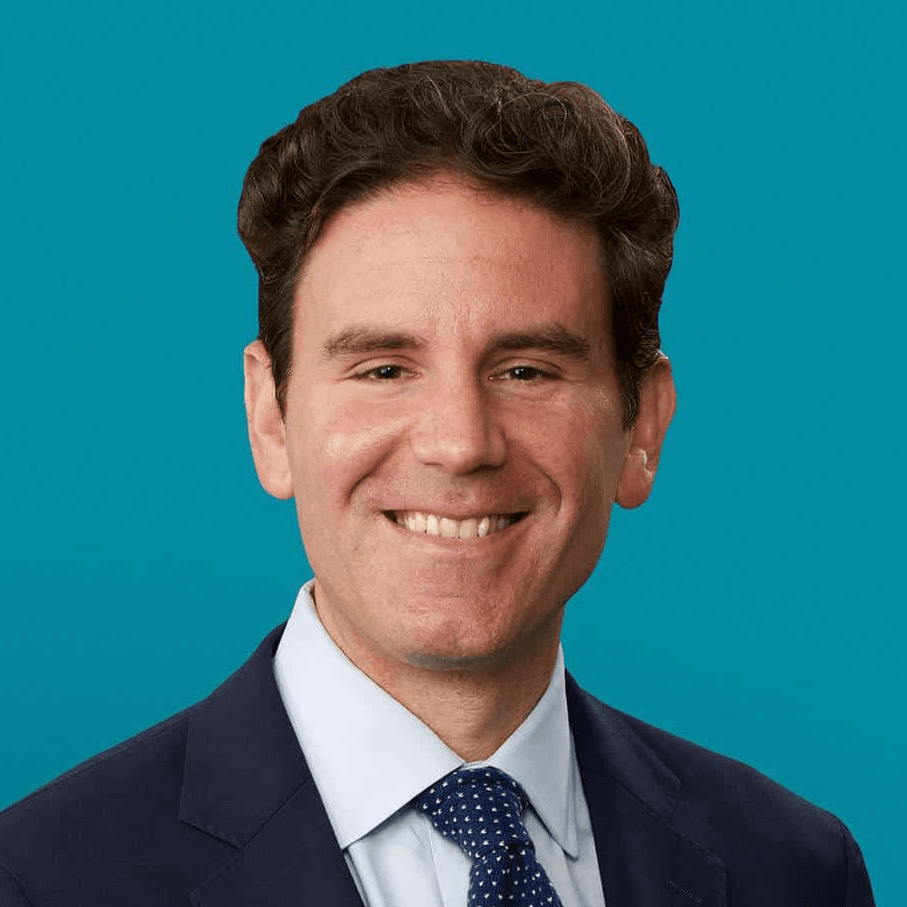
American families now spend roughly one fifth of their income on health premiums, and if current trends hold, that number could reach 40 percent by 2032. In this episode of Value Health Voices, Dr. Amar Rewari and Dr. Anthony Paravati sit down with Joel White, president of the Council for Affordable Health Coverage and former staff director of the House Ways and Means Health Subcommittee, to understand why the system keeps charging more while delivering narrower networks, higher cost sharing, and more prior authorization friction.
Joel argues that the United States does not have a free market in health care at all, but a system of localized monopolies shaped by regulation. He walks through how the medical loss ratio rule became a consolidation engine for vertically integrated insurers, how 340B drifted from a safety net program into what he calls a scam that never reaches the patient, and why pharmacy benefit managers capture roughly half of every dollar spent on drugs. Along the way, he explains what the PBM law signed earlier this year actually changes, why CMS is pushing site neutral payment into imaging, and why he believes fee-for-service medicine is a relic that should be retired.
The conversation closes with Joel's five pillar agenda for affordability: real price and quality transparency, giving consumers the freedom to choose any approved plan, sending subsidies to people instead of insurers, driving down underlying medical costs through simpler value-based models, and restoring competitive markets through antitrust enforcement and more independent practice. Whether you lead a health system, run a practice, or simply pay a premium every month, this episode offers a clear map of the reforms that could reshape what care costs in the next few years.
Resources:
【Council for Affordable Health Coverage Policy Priorities】
【Patients Deserve Price Tags Act (S.3548)】
【Association Health Plans Act (H.R. 2868)】
【LinkedIn】
【Instagram】
【TikTok】
【Newsletter】
【Apple Podcasts】
【Spotify】
The Shift from Coverage to Affordability
Joel White: Everywhere I go around the country, people are basically saying, "I'm paying a lot more, and I'm getting less value. This system is not working for me." That's kind of where we were two to three years right before Obamacare was enacted.
The issue back then was really coverage. People felt insecure, like they could lose their coverage. If I went to the individual market, they could deny my cancer care or my heart medications.
Now, what we're seeing this insecurity around is affordability. I'm covered, but I can't afford what I've got, and what I've got seems to be very low value.
Introduction to Joel White and the Council for Affordable Health Coverage
Dr. Amar Rewari: Welcome back to another episode of Value Health Voices. Today we have Joel White with us, who is the president of the Council for Affordable Health Coverage.
As president, Joel has led a seasoned team of government affairs professionals while managing the coalition of more than 30 organizations representing patients, drug manufacturers, providers, employers, and other sectors committed to market-based reforms that lower costs for consumers.
The organization he leads has helped enact a number of laws to lower health costs and advance market-based reforms, including small businesses and individual coverage reforms, drug cost reductions, consumer transparency, and expansion of HSAs, which we will be getting into on this episode.
Interestingly, Joel also previously served as the staff director for the U.S. House Committee on Ways and Means, where he played a crucial role in enacting significant health policies, including the creation for the Medicare Prescription Drug Benefit and HSAs.
He helped negotiate and pass key legislation, such as the Deficit Reduction Act and the Tax Relief and Health Care Act. So welcome, Joel, to this episode. Thank you. I'm Dr. Amar Rewari.
Dr. Anthony Paravati: And I'm Dr. Anthony Paravati. We are physician executives, and we're the hosts of the Value Health Voices podcast.
Dr. Amar Rewari: We started this podcast to break down the business and policy forces shaping American healthcare today.
Dr. Anthony Paravati: We talk with the people shaping these decisions, and we bring a perspective from both the front lines of patient care and the C-suite.
Dr. Amar Rewari: Our goal is simple: give you clear, practical insights to help you lead in a system that's constantly changing. Let's get into it.
Dr. Anthony Paravati: Well, Joel, thank you so much for being here. Joel White is the president of the Council for Affordable Health Coverage. We're excited to have you on because so much is happening in the healthcare reform space that impacts the cost of healthcare that the consumer and the patient pays.
Why don't we let you speak for a minute about the council's mission, the council's activities, and even your background and how you came to the organization?
Joel White: Thank you for having me on. The Council for Affordable Health Coverage was started 25 years ago by a group of individual insurance companies that wanted to make health coverage more affordable in the individual insurance market.
They proposed a refundable tax credit to help people better afford their coverage, and that ultimately became the basis of Obamacare and what we have in the market now. I don't think they would have designed it the same way. This is part of a process that pulls together major laws to get affordability to people.
That's kind of how we started, and we've definitely evolved over time. I came to the organization in 2008 and became the president, and we've since shifted our focus to what are the different policies that we can get Congress, states, regulators, and the American people excited about.
We want policies that actually get enacted so that we move the needle towards affordability and away from higher costs. I wish I could say I've been more successful, but there's definitely a lot going on in the environment.
My passion is around affordability. It's what I get up thinking about in the morning. What I hope to do all day long is to drive better affordability for consumers, which means their costs are going down relative to their income or their wages. That has not been the case, unfortunately, for several decades.
The Rising Burden of Healthcare Costs
Dr. Anthony Paravati: I was just in preparation to talk with you, looking at some projections. Right now, we're already at a situation where healthcare costs are growing three times faster than wages.
If we continue on that trajectory, by about five or six years from now, it's been projected that U.S. families would spend up to 40% of their income. As a country, we look at percentage of GDP, we spend 20%. One dollar in the economy is spent for us to generate the other four dollars of GDP. That would be two in five, which is incredible to think about.
Joel White: It's unsustainable. We actually did that calculation. Right now, the typical family will spend 20% of their income just on premiums. Then we add in out-of-pocket costs—what you pay at the pharmacy counter or in the doctor's office in cost sharing.
They're spending one-fifth of their income just on healthcare premiums. If the current trends persist and health costs grow faster than what people take home, they'll spend 40% by 2032.
That is not sustainable for a vast number of families in America. They can't have that much of their education, housing, food, and gas crowded out by healthcare premiums.
Quite frankly, what we're seeing over the last couple of years is we're paying more, but we're getting less value out of our coverage. Your premiums still go up. You're buying coverage for drugs and doctors and hospitals, but your cost sharing is going up too.
Every time you go see a doctor or get a drug, you're paying more out of pocket. We're also seeing networks or access to those doctors and drugs starting to get narrowed. We have less access to specialists, and it is not as robust, particularly in the mental health space.
Finally, what's happening in the insurance markets in particular is we're seeing a lot more management of those benefits. Before I can even get the service paid for, I have to go through a prior authorization and ask, "Mother, may I please get this benefit?"
People are feeling this incredible friction right now. Everywhere I go around the country, people are basically saying, "I'm paying a lot more, and I'm getting less value. This system is not working for me."
That's kind of where we were two to three years right before Obamacare was enacted. The issue back then was really coverage. People felt insecure, like they could lose their coverage. If they went to the individual market, they could deny cancer care or heart medications.
Now what we're seeing this insecurity around is, "I'm covered, but I can't afford what I've got. And what I've got seems to be very low value."
Market Failures and the Pillars of Reform
Dr. Amar Rewari: This concept of affordability is such a bipartisan issue right now. We hear people on both sides of the aisle talking about it. Healthcare is one of the largest segments of spending in the U.S.
I'm so hospital that your organization is focusing on this. I know there's a lot of areas we could cover, but maybe we could talk about five different areas of reform and then go deep into those buckets. Joel, do you want to give us CAHC's platform around these five pillars or areas of reform?
Joel White: It starts from the premise that we don't really have a functioning market anymore. A lot of people think we have free market healthcare and feel it's not working, so they want to turn it all over to the government for Medicare for All.
The fact is the government is involved in almost every dollar that gets spent in healthcare. Every regulation, every doctor's practice in America, and every consumer decision is shaped by a rule that the federal or state government has issued.
The government is really defining the market. The second thing happening right now is those markets are highly uncompetitive. What we have is a system of localized monopolies.
97% of all hospital inpatient markets—where you go for a heart scope, surgery, or a broken arm—are uncompetitive. In insurance markets, about 73% are uncompetitive. In Obamacare, it's like 99%.
It is really not a free market system; it's a system of localized monopolies. When we get those monopolies, we get much higher costs.
Even with consolidated insurance markets, we're seeing insurers buying the pharmacy benefit managers and the pharmacies. They are directing people to their own pharmacies, but they're also buying doctors, clinics, imaging centers, and in some cases, hospitals.
There's no interest or aligned incentive anymore to drive costs lower. All the incentives in the system are to drive costs up because everyone on the provider or insurance side benefits when those costs are higher.
We want to restore those markets. Think about televisions. When TVs come out, they might have a higher launch price, but then the price goes down over time as competition drives those prices down. Quality goes up.
We have the opposite in healthcare. Quality seems to go down as prices go up. How do we fix that? I think the first thing we need to do is put consumers in the driver's seat and empower patients and families to take charge of their healthcare.
To make that happen, first, we need transparency. That's just foundational. You'd never go to a gas station and fill up your tank if you didn't know the price per gallon. You'd drive to the next station.
In healthcare, we do that every day. We go and we get a procedure. No one can tell us what the price is or what we'll owe after the procedure is done. We don't shop for services, even though consumers can shop and they want to shop.
Transparency around price and quality is just foundational. That's the first thing. Turn the lights on. Let's see what's actually being paid for and what we're getting.
Addressing Information Asymmetry and Price Transparency
Dr. Amar Rewari: When we talk about transparency, the issue that comes up is this asymmetry of information. It's like someone who goes to a car mechanic; the average consumer doesn't understand what consists of things under the hood.
There's an information gap between the consumer and the provider. Sometimes listing prices leads to the criticism: will people really be able to shop around if they don't understand what those prices mean?
Can you speak to some solutions you have around price transparency to avoid that information asymmetry?
Joel White: In the first Trump administration, we saw hospital insurance price transparency rules come out. It was kind of like, "I'll just post these things on the wall or release these machine-readable files."
No family in America and no employer is going through those spreadsheets. Maybe they're helpful to a consultant somewhere, but it is unusable price information.
When you go on Amazon and you see 50 different products, you know the price and you can see the reviews. You can figure out if someone had a good experience, if it was high quality, or if it was just crap.
That's what we're talking about in terms of actual transparency. You've got to get from these big machine spreadsheets into something built into a very simple app where I can look. We're starting to see some of this, particularly in telehealth.
With apps, it'll say, "Here's 10 doctors in your area or in your network that you can go see. This is your cost sharing, this is the quality, and here are the patient reviews."
That's what we want to get to: something actionable. We've endorsed the Patients Deserve Price Tags Act, which is a bill from Senator Marshall. It takes the next step to say it's not just giving the price and posting it on a wall.
It’s actually about what the consumer is going to pay when they go to the pharmacy counter or the doctor in advance. I think the information asymmetry argument is a little overblown. I think consumers are smart.
Particularly price-sensitive, lower-income consumers look for good deals. The percentage of shoppable services is somewhere between 20 and 25 percent. The price difference between the typical price and the high-end price can be 30 to 40 percent.
If consumers get actionable information and they have power to shop, they can actually go get a better deal and drive down their cost by 30 to 40%. We need the Patients Deserve Price Tags law. My understanding is that's going to get marked up later this year, and we're hoping to get it signed into law.
The Regulatory Drivers of Consolidation
Dr. Anthony Paravati: We'll definitely be following that here on the Value Health Voices podcast. That is a very interesting, potentially meaningful policy step.
I want to take us back to the conversation about consolidation. I've often asked myself if consolidation itself is the root cause of the market failures in healthcare, or if it's our approach to regulation.
Regulation creates an environment where you have to be huge in order to manage the cost of compliance and make a reasonable operating margin in a high-cost, heavily regulated, very mature market. Tell me what you think about that.
Joel White: It's gotten very difficult to be small and operate successfully as a business in this market. We have a massive regulatory state. Compliance burdens are real.
You've got to get bigger to scale to absorb those costs and do well in value-based programs, like the ACO model. It's so complex with the quality reporting requirements, the data requirements, and the financial levers.
There are about five different levers in a typical ACO that are sometimes moving in different directions. You don't always have actionable information on the provider side to make good decisions about engaging a patient who is not adhering to their care plan.
The only successful ACOs that are doing this are doing it at scale, and they're the larger systems and larger group practices. The typical community oncologist or cardiologist in a small community is just not able to comply with these things. We're not getting that bang for the buck.
I think what we've seen historically is a failure of enforcement. Prior to the Affordable Care Act, about 80% of inpatient markets were consolidated. Post-ACA, we saw this acceleration in consolidation.
Two things were happening at once. First, the enforcers and regulators—the FTC and Department of Justice—were kind of asleep at the switch. They were allowing these mergers to go through without really challenging them, even though we have laws on the books to prevent them.
Competition laws are designed to prevent monopolies or anti-competitive practices because those are bad for consumers. On a bipartisan basis, members of Congress agree with that.
The ACA kind of set that trend on fire as the enforcers were asleep at the switch. We had a series of policies come online. First, we heavily regulated the insurance markets because we didn't want "junk insurance."
That meant putting a 20 to 40% increase in costs on the regulatory side onto these insurers. They logically passed that on to consumers. At the same time, they started consolidating to help handle those compliance costs and be successful in the market under the medical loss ratio rule.
The second thing that happened was we massively expanded 340B. On the hospital side, the hospital gets a lower input price, but they can mark that up and get reimbursed at a higher rate that's not available generally to physicians.
It dramatically expanded through contract pharmacies. We see hospitals with pharmacies on the other side of the country. They've used that to generate cash that they're now using to buy other nonprofit facilities or buy physicians.
They then convert them into a hospital facility to get more cash through 340B. That's an example of policy-driven consolidation. We saw both happening at the same time.
It was 80% before the ACA, and it's now 97%. The insurance market was much more competitive at about 50%. Now it's 73%. In some states, it's really one insurer in specific markets like Obamacare.
The Medical Loss Ratio and Vertical Integration Incentives
Dr. Anthony Paravati: The hospital response is to continue the consolidation push because they have to be bigger to compete against dominant insurers.
We talked about this previously on the podcast, but I really want to put a pin in the medical loss ratio. If you look at the math, only 15% of premium revenue can be spent on administrative expenses.
That single thing is the biggest headwind to value-based care because the insurers want higher costs. 15% of a ton of money is a lot more money to retain than 15% of much less spent on medical care. It's just a huge problem. I don't know if you guys have ever commented about that, but it's sort of a truism.
Joel White: We're in the process of drafting legislation to fix it. Ideally, we would repeal MLR; I think it was a failed experiment. The idea was to cap profits and administrative costs at 15 or 20 percent depending on how big you were.
The incentive you described is that the only way an insurer can increase their profit is by increasing their premium. It became an incentive to consolidate.
If an insurer buys a doctor—and one insurance company owns 10% of the physician workforce—they can then pay their doctors more and count that as medical spend. That money flows back to the parent company, and they bank that as revenue while avoiding the MLR cap.
They're just using these accounting gimmicks to move money around, but they charge us more for the care that's not actually going to benefit the patient. It's a consolidation engine.
Dr. Anthony Paravati: For the finance and accounting nerds out there, that's called intercompany elimination. Eric Bricker made a great video on this.
If you put a rule in place that makes the insurance business a quasi-utility, it drives these large companies to diversify into service businesses, like owning providers and PBMs, which are outside of this regulatory structure. That's why we've arrived at the reality of the so-called "omni-channel" healthcare company.
Joel White: We're trying to level the playing field to make it so there is no incentive to be a vertically integrated insurer where you own doctors and clinics versus being a standalone insurer.
Basically, the idea is if you own a physician and you pay that physician, you can only bank the cost based on the current market rate—not the 60% more that you're paying that doctor in that market.
We're not saying you can't pay that physician 60% more. We're just saying you can only count the average cost of providing that service in that market. We're trying to equalize those rules.
One company is doing this so much and owns 10% of the physician workforce. 42% of their revenue is generated through these intercompany transfers. It is a massive strategy involving hundreds of billions of dollars.
They have deployed this for a number of years to gobble up everything in the market and create vertically integrated, anti-competitive monopolies that charge higher premiums. That is a problem that regulators should be all over. We think the law needs to be changed, and we're working with Congress to draft legislation on that.
Reforming the 340B Drug Pricing Program
Dr. Amar Rewari: I wanted to bring up another thing you mentioned around 340B. In the proposed rule by CMS, 340B drug pricing is going to be heavily impacted with almost a 39% cut from where we currently are.
The 340B program started with good intentions as a way to make drugs more affordable for hospitals providing care for indigent patients. As you mentioned, many hospitals have taken advantage of that system to acquire and consolidate into markets where they gain access to that pricing to increase profits.
How does the Council for Affordable Health Coverage feel about keeping some of these safety net benefits while still looking at these reforms? How are you rectifying that?
Joel White: I worked on Capitol Hill for 12 years. I was a staff director at the Ways and Means Health Subcommittee and helped write nine laws. One of those was the ASP law, or how doctors are reimbursed for their drugs. That's really the lever CMS is using here.
They took a survey of hospitals and asked how much it cost them to acquire 340B drugs. Now they are saying they'll reduce reimbursement under ASP by 33.4% for those drugs and put that money back into services on the hospital side.
I think that is a logical response to a system that is messed up. 340B is the second largest drug program, with $81 billion in annual discounts provided to safety net hospitals.
CHC would not disagree that that's a good goal. We want more resources going to low-income people and a strong safety net. However, 340B has morphed into a scam. Those discounts provided to those hospitals never end up in the patient's pocket.
When we think about affordability, we think about the patient. We would like those discounts to go ultimately to the consumer. Right now, the consumer is paying cost sharing on the list price of the drug, which can be 10, 20, or 100 times more than what the hospital actually paid for it.
In an ideal system, if we want to have an honest conversation, let's just tax the drug manufacturers and give that money to the hospitals.
We've got this crazy system now where hospitals can't even say, "We've given this 340B drug to this patient, so you owe us a discount." The manufacturers are saying, "Prove it. Show us the claim."
The hospitals are basically saying, "You'll put us out of business if we have to prove that we actually delivered this drug to this patient." We are way away from a virtuous program that operates with transparency and accountability. This response from CMS is an attempt to get back to some accountability.
Nonprofit Accountability and Community Benefit
Dr. Anthony Paravati: I'm wondering if more stringent requirements to demonstrate community benefit and how they use those funds to invest in "wraparound services" would help.
There's no structure in the existing Medicare physician fee schedule for those services, but they are necessary for the safe passage of the cancer patient through their journey of care. That's an area where regulation could have been straightforward.
I do love your point on reducing the coinsurance or the cost sharing that the patients are paying. How do we not even think of that by this point? If we left everything else equal, that would be the first thing to do.
Joel White: You'd have to prove that the drug was actually delivered to that patient in order to say they get a lower cost-sharing rate. Transparency should be foundational in this program.
The Ways and Means Committee marked up legislation two weeks ago that basically said if you're a nonprofit hospital, we want you to tell us what you are doing for community benefit. You don't pay taxes, so we want you to demonstrate what you're actually doing for the community.
It can't be just putting a bike rack in front of the hospital or advertising on the local sports stadium. The second requirement was that you actually tell us what you're doing for charitable care for low-income patients.
There's no requirement on nonprofits to actually provide a dollar in charitable care. The interesting thing is nonprofit hospitals provide the least amount of charity care per dollar of any type of hospital. Your for-profits and government hospitals actually provide much more.
Not being taxed, not giving charitable care, and getting the 340B discount—the third part of that bill says, "Tell us how much you bought and what you made on the 340B program."
The hospital response was, "You're going to put us out of business. This is going to be hard to comply with." These are the same hospitals that go to Wall Street and get bonds for massive construction projects. They are able to break down their finances pretty damn easily for Wall Street.
I don't think this is going too far. AHA would say they provide 11 or 12 times more in charitable care than the value of their tax break. If it's a transparency initiative, they should be proud of it and show us on the tax form.
Ways and Means is just trying to get to disclosure. The point is there's so much money in this program and the system generally. Entrenched incumbents and big players are fighting almost every effort to get to a more value-based system.
Site Neutrality and Setting-Independent Payments
Dr. Amar Rewari: I wanted to ask your thoughts about site of service payment.
Medicare pays higher rates for the same service depending on where it's delivered. A cardiac cath costs more in a hospital than an ambulatory surgery center. What is the organization's solution around site of service?
Joel White: We support paying the same rate for the same service regardless of setting, if it makes sense clinically. Moving to site-neutral drug administration for hospital outpatient departments starts to level the playing field.
This is another consolidation driver. If you're paying the hospital outpatient department more just because it's got a different sign on the door than it did yesterday, that's not a good reason to pay them more.
In this year's hospital outpatient rule, CMS is expanding that policy to imaging services. That seems to make sense. If you have high prices, a lot of times that's a supply problem.
We would love to see more nurses, doctors, and pharmacists brought into these programs and practicing at the top of their license. We'd love to see more physician-owned hospitals to compete with big incumbents. If it makes clinical sense, the rule should be: pay the same rate for the same service regardless of setting.
Dr. Anthony Paravati: Is there any justification for the higher cost of operating 24/7 services in the hospital setting compared to an ambulatory place that shuts down at 5:30 p.m.?
Joel White: We're talking more about the ambulatory services, not necessarily the inpatient services. We've seen real movement into off-campus hospital outpatient departments.
The hospital bought a doctor's office and made them a part of the hospital system. Now they're getting the hospital reimbursement rate versus the physician office rate. That's where the site-neutral policy really needs to move into.
CMS has been doing this first with drug administration and now with imaging services. Hospitals have a different cost structure, but the question is: do we have a payment system that encourages efficiency or anti-competitive behavior?
Right now in Medicare, we're seeing rent-seeking behavior in ambulatory spaces—people going to just earn another buck versus staying independent or delivering higher quality services.
Dr. Anthony Paravati: We covered the marching towards site neutrality on an episode of the podcast. Around 2015 or 2016, hospital off-campus departments started to see equalization in reimbursement compared to ambulatory settings.
The question is, if you're a hospital operator providing charity care and uncompensated care, should you continue to get more for the same services if they are provided in a hospital on-campus department?
Those departments are still ambulatory in the sense that patients aren't admitted. You ever wonder why hospital buildings that aren't really hospital buildings but are adjacent are connected by enclosed bridges? That has to do directly with that regulation.
The argument breaks down in hospital off-campus departments, which are miles away and provide a narrow range of ambulatory services.
Joel White: That's right. It's the same thing with 340B contract pharmacies that are hospitals in Los Angeles and the pharmacy is in Maine. Come on.
A core challenge in affordability is underlying medical costs for services and drugs. They are about 80% of the premium dollar. If you want affordability, you've got to drive down those service costs.
We need better value-based care programs. I don't think we've seen the bang for the buck that we need out of ACOs and other models, like the CKD model or the Enhancing Oncology Model.
They're too complicated and they force scale and bigness. The incentives aren't aligned. Patients don't necessarily share in the savings, and they're less engaged in their care.
The data issues are real. It's hard for a doctor to address problems if the data lag is six months to two years down the road, but they're getting judged on their performance that year. We need to simplify and make these models work better for providers, particularly for smaller practices.
Moving Beyond Fee-for-Service Medicine
Dr. Amar Rewari: A lot of the models that have failed are voluntary models. There needs to be a move toward these models being mandatory because otherwise, you're just cherry-picking. People who are efficient aren't going to enroll in these models if they only see a small bump. What are your thoughts on that?
Joel White: I would argue we should start with fee-for-service. I would get rid of fee-for-service; it's a relic of the 1960s. The big issue there is driving volume.
As we adopt AI, it will make practices more efficient and able to deliver more services per hour. In a fee-for-service world, that will be a cost driver. In a value-based care world, AI can be a cost saver and allow doctors to spend more time with patients.
We need to accelerate getting rid of fee-for-service medicine and move into broad adoption of value-based programs. If people want the managed care model driven by insurers, they can pick that.
There's huge value in having the doctor be the owner of the care team and managing the financial incentives. Give them freedom within that model, get them out from under the regulatory structure, and let them practice medicine in the best way they see fit. Don't restrict telehealth or other services.
Dr. Amar Rewari: If you're saying remove fee-for-service, are you talking about an episode-based model with a bundled payment, or what do you foresee as an alternative?
Joel White: A primary care home would probably be a more likely structure. I'm thinking primarily of Medicare here. We have challenges in Medicare Advantage, to be sure, but most folks choose those models because they're comprehensive and look more like employer plans.
They offer lower or zero premiums and reduced cost sharing. Those things are not what you see in fee-for-service. Fee-for-service is defined by statute, and your cost sharing is relatively high, which is why people buy supplemental insurance.
Episodic programs for specialized or acute care are appropriate, but for the vast majority of people, a primary care capitated arrangement is very simple. It gets out of this old way of thinking where relationship with another doctor is seen as inappropriate.
The Stark rule problems, restrictions on telehealth, and restrictions on remote monitoring are vestiges of a world that went away six decades ago.
Dr. Amar Rewari: The system you're talking about sounds very similar to a Kaiser model, which involves more vertical integration. The criticism is that you're actually encouraging vertical integration because smaller practices won't be able to provide that level of care at those prices. How do you reconcile that?
Joel White: I dispute the premise. Don't think Kaiser model; think direct contracting model. CMS acts like an employer and says, "I want to directly contract with Amar for this patient panel and pay a capitated rate."
I'm going to give you freedom because you've proven you're a five-star doctor. If you're a four-star doctor, maybe we have an adjusted payment or incentives to get you better. If you're a one-star, maybe we don't want to contract with you. It's much more of a direct contracting model than a Kaiser staff model.
Empowering Consumers and Direct Primary Care
Dr. Anthony Paravati: So it's like the two-sided ACO but without all the jargon and complex compliance. I work at a health system that runs a large ACO, so it's easier for me to think about that. I know that direct primary care is a big point you all push as a value driver.
Why hasn't direct primary care taken off more? Why does it remain this niche business?
Joel White: I think we're still in "insurance jail." I hate to sound so negative on the insurers; they bring value to the market. But again, people are paying a lot and not getting value, so they're trying to get out from under the insurers.
We see that in direct primary care, often driven by the employer. For the HSA and direct primary care models, that's the consumer trying to get direct access to the doctor without an insurance middleman.
We're seeing it in TrumpRx too. 87% of the people coming through that site have coverage, but they're looking for a better deal because they're paying the insurance price for the drug versus the cash price, which can be two to five times cheaper.
They're trying to get out of insurance prison. That's why I'm saying we're probably two to three years away from some pretty big reforms. They should be focused on empowering the consumer.
To get back to that list, it means transparency and giving the consumer agency. Let them pick whatever plan is available that the insurance commissioner has approved.
Don't give the money to the insurance company; give the subsidy to the consumer through an HSA or some other structure. Then the insurance company has to earn their business.
The insurer should be begging for the consumer's business, not the consumer begging to get healthcare covered. If you address vertical integration and drive down medical costs, you'll have a system where costs are growing slower than wages and consumers are in the driver's seat.
Reforming PBMs and the Pharmacy Supply Chain
Dr. Anthony Paravati: That's a great summary. We've been talking about the huge chunk of premium spend that comes from drug costs. One of the major areas of reform already in motion is PBM reform.
I wanted to call that out and see where your organization stands. Significant movement in the PBM space is happening. Why does the structure of PBMs drive higher spend, and what is happening to upend that business model?
Joel White: If there's no other takeaway, I hope your listeners take this away: 50 cents of every dollar spent on drugs doesn't go to the drug manufacturer. It goes to a middleman, mostly to the PBM. They take that 50 cents and they keep it.
They'll tell you they keep it to lower your premiums. The PBM manages the pharmacy benefit and is hired by the health plan or employer to drive better deals.
A "better deal" is when the dollar list price gets negotiated down to 50 cents, but the PBM keeps 45 of those cents. They never pass it to the consumer.
A law passed in February of this year changed commercial and Medicare markets. It’s the first step to get the middleman out. It requires rebate pass-through back to the plan sponsor, though not necessarily to the consumer yet.
In Medicare, PBMs can no longer be paid based on the price of the drug. If you've got a thousand-dollar drug, you have to be paid based on the service you're actually providing. That service has to be bona fide and audited.
If I push some paper around and that cost me 10 bucks, you're going to get paid 10 bucks, not 500. That means we're going to see more dollars going back to plan sponsors to lower premiums and back to consumers to lower out-of-pocket costs.
The law also requires transparency. It requires the PBMs to disclose the value of the rebates and what's on the formularies. This will start to change behavior, but it's not the end of it.
For the "Big Three," the insurer buys the PBM and the PBM buys the pharmacy. I steer people to my own pharmacy where I charge a higher dispensing rate. I don't let them go out of network even if it's cheaper.
The FTC has entered a consent decree with Express Scripts and is in process with the other two. They've got to start passing these savings along to consumers.
We're working with Congress on a "PBM 2.0" to go further in employer markets. We need to give consumers choice. If they get a lower cash price, let that count against their insurance obligations.
Dr. Anthony Paravati: For PBM 2.0, you're talking about a bill that would provide help to self-insured employers. You'd be essentially saving them from themselves because the employer market remains so clueless about how to serve their employees better.
Several large employers have been sued by their own employees for violating their fiduciary interest under ERISA by having employees overpay for prescription benefits.
Joel White: Most of the money is now flowing through specialty pharmacies and through fees. I think that's where the next PBM reforms will go. 95% of Americans live within five miles of a pharmacy, but we totally underutilize them.
PBMs underpay pharmacies. A lot of the drugs dispensed at the pharmacy level are underwater because the PBM is under-reimbursing and then clawing back revenue based on quality measures the pharmacies didn't even know about.
It's like a value-based care model where I don't even know what I'm being judged on. We need to reform the pharmacy side as well. Mark Cuban talks about Cost Plus Drugs and getting to a dispensing fee that actually covers the service costs.
Dr. Anthony Paravati: We'll be diving into these issues with Mark Cuban soon. What you were talking about there at the end was so-called "spread pricing," where PBMs are printing money while starving retail pharmacies of reimbursement.
Portability and Association Health Plans
Dr. Amar Rewari: I wanted to go back to the subsidy portability. Large employers negotiate rates on behalf of millions of employees. If these employees purchase marketplace plans with portable subsidies, do you think they'd have more or less negotiating leverage?
Joel White: When I say subsidy portability, I'm referring to the individual market in the ACA. On the employer side, federal laws prevent employers from banding together in pools to get better rates.
A 500-employee employer gets a better rate than a 50-employee small business, but they're all minimal differences. I want to take a 20,000-employee business, combine them with a 50-employee business, and let thousands of businesses band together.
Those are called Association Health Plans. That concept passed the House in January. Interestingly, after the ACA bonus subsidy discussion, some in Congress dropped the idea of doing anything on healthcare.
They've got hundreds of ideas that have passed the House but they're not crossing the finish line. This is the number one health issue in America. Democrats are going to run on this issue, and we're trying to motivate Congress to explain that this is what voters are looking for.
Dr. Amar Rewari: You don't think that boosting portability in the individual market will discourage employers from providing insurance, knowing their employees can purchase it individually?
Joel White: The ACA has already done that. After the ACA was enacted, 12 million employees in small businesses lost their coverage and went to Obamacare.
That was a shame because Obamacare has narrower networks, less access to drugs, and more managed benefits than small business coverage—and it costs three times more for taxpayers.
We were paying more and getting worse coverage because we put all the regulations on small businesses but gave them none of the subsidies. We want to get those people back into a good small business plan.
We should give them Association Health Plans and create incentives for small businesses to self-insure under the ERISA law. The Lower Healthcare Premiums for All Americans Act from Harshbarger and Miller-Meeks, and another bill by Rick Scott and August Pfluger, include the concept of banding together for a better rate with a tax credit.
Finally, we love HSAs. When we wrote the law, we knew employer deductibles would one day be higher than the minimum threshold required. Every employer plan should have an HSA sidecar that allows consumers to use tax-free dollars for out-of-pocket costs.
Summary of High-Leverage Reform Pillars
Dr. Anthony Paravati: Joel, your extensive health policy experience has had a tremendous impact. The Council is having a major influence on these reform efforts in Congress.
PBM reform was a massive policy victory for patients. We can't thank you enough for being on with us. Do you want to close us out by reminding the listeners what those high-leverage winners are for driving down costs?
Joel White: We need to drive down medical costs. The biggest cost of every health dollar is hospital spend and then physicians. We need value-based care to make significant inroads there.
At a fundamental level, we need to put consumers back in the driver's seat. We need transparency in prices and quality so people know what they're buying and can make informed decisions.
We need to give consumers agency. Let them choose the plan that works best for their family, not what a government rule or insurance company says. Then, give people resources. Don't send money to insurance companies; give it to people through an HSA or another vehicle.
Finally, we need functioning markets. We need to break up monopolies and allow competition. We need more doctors, nurses, and pharmacists. We need enforcement of antitrust rules and incentives for people to be independent and practice medicine again.
Dr. Anthony Paravati: That's a great summary. It's a pleasure talking to you, Joel. I wish you all the best as you continue your legislative and advocacy efforts. Thanks again for being on the Value Health Voices podcast.
Joel White: Thanks for having me.