
Health Policy & Regulation
Dr. Zeke Emanuel: The ACA's Fatal Flaw, Junking 340B, and Why AI Will Outperform Doctors
00:0000:00
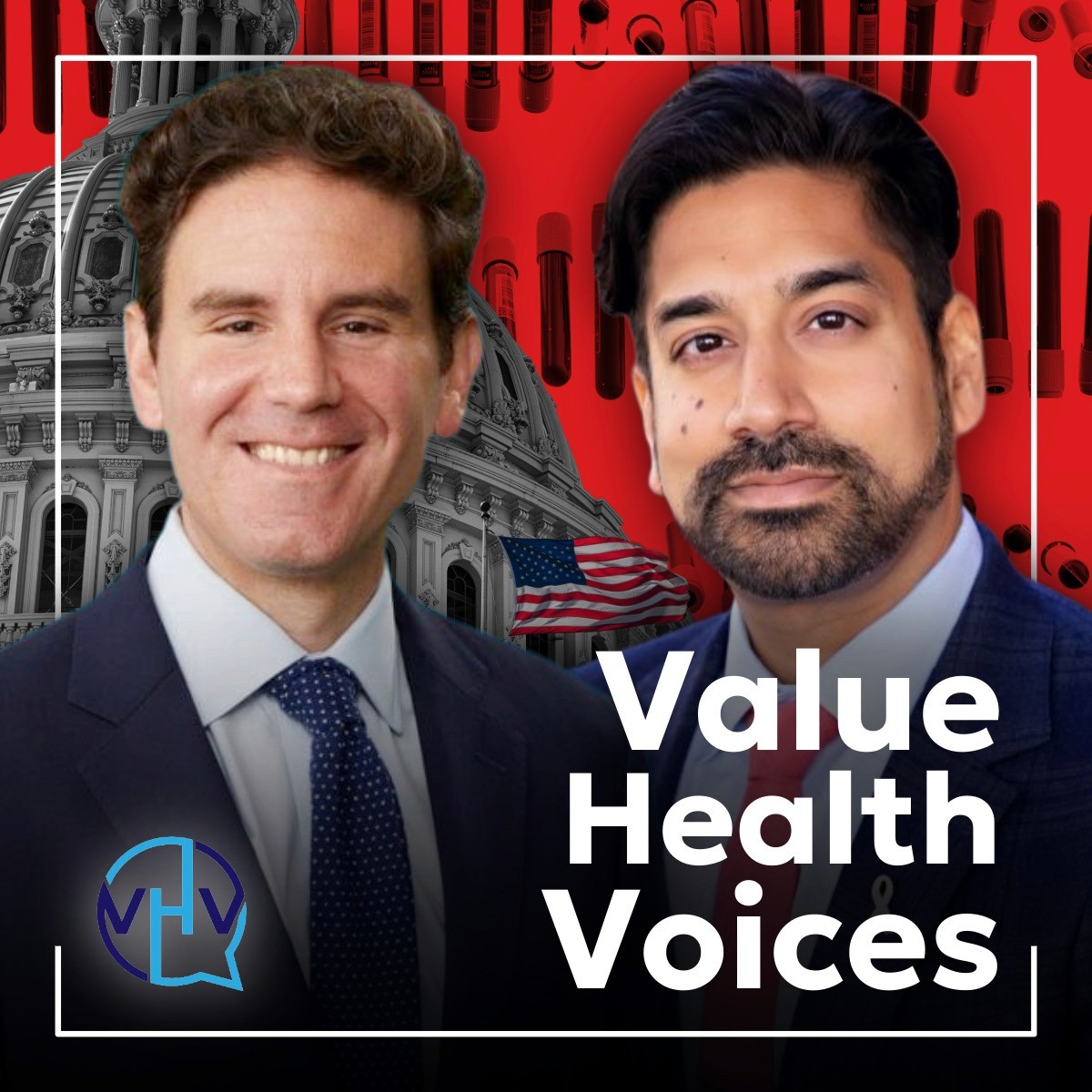
Dr. Ezekiel "Zeke" Emanuel helped design the Affordable Care Act, and 16 years later he has a surprising answer to what he would change: the law made an already impossible system even more complicated. In this episode of Value Health Voices, Drs. Anthony Paravati and Amar Rewari sit down with the oncologist, medical ethicist, and University of Pennsylvania professor for a wide-ranging conversation on what the ACA got right, what it got wrong, and why he believes the next wave of reform has to be built on three mantras: simplification, standardization, and digitization.
From there the conversation runs through the greatest hits of health policy frustration. Zeke explains why the IRA drug negotiations were not the home run the country needed, how the biologic and small molecule patent protection timelines quietly bias the market toward more expensive drugs, and why he would scrap 340B entirely in favor of direct subsidies and a tax on manufacturers. The three physicians also dig into the RUC and physician fee schedule, radiation oncology's failed bundled payment experiment and the new ROCR proposal, percentage-based reimbursement for drugs that have driven up drug prices, and the growing evidence that private equity has yet to improve cost or quality anywhere in medicine.
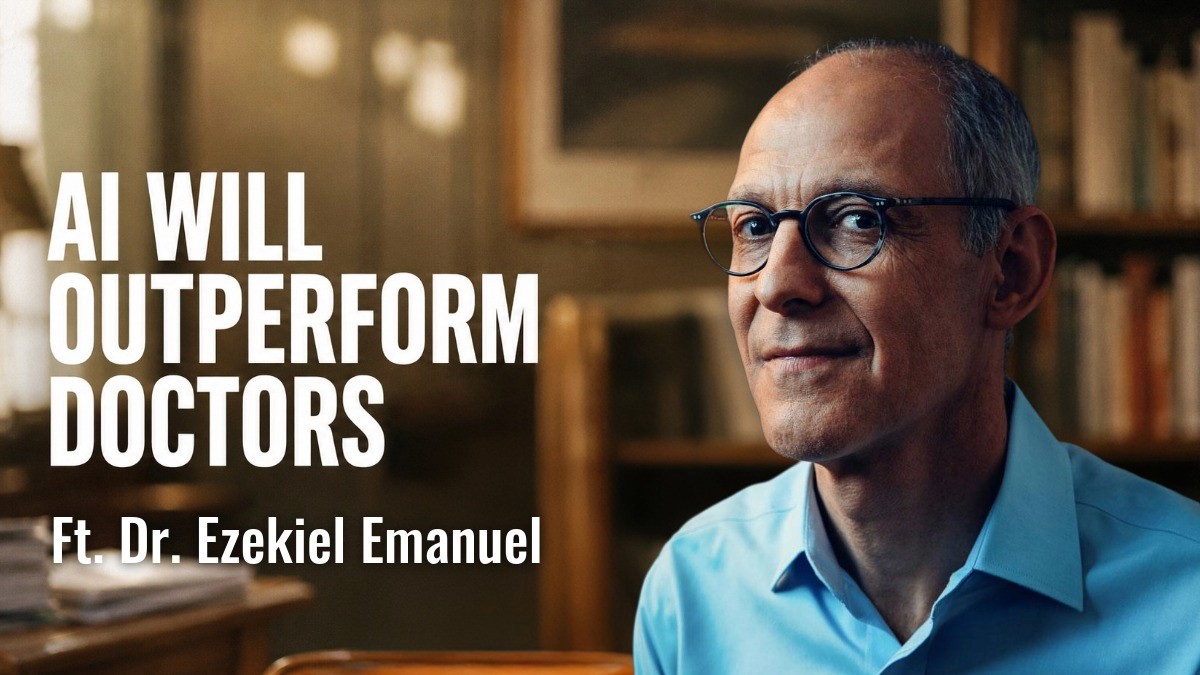
The episode closes with two of Zeke's most provocative arguments. Drawing on his new JAMA review of more than 100 studies, he makes the case that autonomous AI already matches or beats physicians in six core clinical areas, and that keeping a doctor in the loop will eventually degrade care rather than improve it. Then he turns personal, sharing which rule from his book Eat Your Ice Cream doctors most overlook and explaining why, more than a decade after writing "Why I Hope to Die at 75," his number has not moved.
Resources:
【Dr. Ezekiel Emanuel Website】
【"Eat Your Ice Cream" By. Dr. Emanuel】
【LinkedIn】
【Instagram】
【TikTok】
【Newsletter】
【Apple Podcasts】
【Spotify】
The Role of AI in Medical Education and Liability
Dr. Ezekiel Emanuel:
Unless we accept the fact that AI is going to be superior than humans, and superior than humans with AI, and then the hybrid model, we won't tackle any of the big questions like, what's the liability? What's the reimbursement? How do we educate doctors in this new era? Those are big questions, and we have to tackle those questions.
But we won't if we keep thinking, well, it's the doctor in the loop. The doctor is the final decision. That is just going to be wrong. And by the way, we know it's wrong because there's lots of good reason that AI gets better and better. Putting a doctor in the loop actually degrades the quality and accuracy. It did it in chess. It'll do it in health care.
Introducing Dr. Ezekiel Emanuel
Dr. Anthony Paravati:
And Amar, we're back with another huge guest, Dr. Ezekiel Emanuel, or Zeke.
Dr. Amar Rewari:
Yeah, very exciting episode. We cover the health policy highlights, and we spend an hour ranting and raving about the current medical system that we're in, from the issues around the ACA subsidy cliff to drug pricing, consolidation in the industry, 340B, private equity, Medicare payment reform, AI, you name it.
Dr. Anthony Paravati:
Yeah, a highlight reel, for sure, of current health policy issues. For him, this is his bread and butter in many ways. One thing I didn't know, Amar, because he's got this recent book, which is so great, so entertaining, easy to read, Eat Your Ice Cream, which is about how to live a long and healthy life.
There are six key tips in that book. He's written 16 books, actually. This is just one of them. If you go to his website and look at his bio, truly incredible. His current role is an MD-PhD. He's the Vice Provost for Global Initiatives and the Diane S. Levy and Robert M. Levy University Professor at the University of Pennsylvania in their medical school.
He's a medical ethicist. We talked about him being an author. He is one of the key architects of the Affordable Care Act. We talk a lot about that in the book. Numerous other roles and awards from Institute of Medicine to National Academy of Sciences. Even on the other side of the Atlantic, awards and designations from the Royal College of Medicine in the UK.
He also received, but he refused, a Fulbright scholarship. I didn't know that, but no surprise that he was awarded that. Truly tremendous accomplishments. He's not only that, but he's down to earth and extremely entertaining to talk to and has truly an excellent grasp on some of the key issues that hold us back in the U.S. Healthcare system and that are opportunities for the future. We're really excited to get into the episode. Let's do it.
Dr. Amar Rewari:
I'm Dr. Amar Rewari.
Dr. Anthony Paravati:
And I'm Dr. Anthony Paravati. We are physician executives, and we're the hosts of the Value Health Voices podcast.
Dr. Amar Rewari:
We started this podcast to break down the business and policy forces shaping American healthcare today.
Dr. Anthony Paravati:
We talk with the people shaping these decisions, and we bring a perspective from both the front lines of patient care and the C-suite.
Dr. Amar Rewari:
Our goal is simple, give you clear, practical insights to help you lead in a system that's constantly changing. Let's get into it.
Evaluating the Affordable Care Act After 16 Years
Dr. Anthony Paravati:
Dr. Emanuel, Zeke Emanuel, thank you so much for being on the Value Health Voices podcast, getting right into it. You've spent the past year since your book came out telling Americans to eat their ice cream. That's a reference directly to the title of your excellent book.
But we want to start a little bit with something else, something about your career that gets talked about maybe a little bit less on TV and in these interviews you do. That is that you're an oncologist, just like Amar and I. You are a breast oncologist, an expert there. But unlike Amar and I, you helped design the really important pieces to the Obamacare law, to the ACA. So we want to start there. Amar, take it away.
Dr. Amar Rewari:
Yeah. And it's crazy to think that ACA is now 16 years old, which in human years, ACA would be old enough to drive at this point. It would have a learner's permit.
It actually touches on a little bit of my career, too, because when I was a student in university, I had studied some of the Swiss health care policy in a comparative social policy class. We had learned a lot about their health care system. And then I worked at Aetna briefly when Romney was governor of Massachusetts.
We were looking at the individual mandate, which it was called at the time, which was a conservative principle. Then eventually it got adopted by the Democrats as the ACA. We watched that whole fight play out. And so my question to you, Dr. Emanuel, is with everything that's happening now with the premium subsidy cliffs, if the individual market only functions with the enhanced tax credits propping it up, is it a market at all? Or do you think the individual market can survive in a post-tax credit world?
Dr. Ezekiel Emanuel:
I think the Republicans are doing their best to destroy Obamacare, to repeal it without repealing it. Partially they're succeeding. They've taken a trillion dollars out of Medicaid. Last year, people are getting Medicaid as a result. A lot more people are uninsured.
We've already had a bump up of nearly 2% in the uninsured rate. And it'll go up higher. And they're trying to destroy the exchanges and get rid of that aspect of Obamacare. The ACA, I don't like to say it's run its course, but its transformative power. It succeeded in two main areas.
First, added more than 20 million people, got insurance as a result, and so drove down the uninsured rate to 8%, which has never been that low in history. And it controlled costs. Healthcare costs stayed between 17% and 18% of GDP all the way to 2023, 2024. And we've never had a period of such stable healthcare costs.
As the New York Times reported in an article now almost two years old, Medicare's costs were so stable, it saved the federal government $4 trillion, compared to projections of what it was going to cost, $4 trillion. Nothing Trump has done has saved anywhere close to that amount of money.
That's a huge amount of money. And what's interesting, and I think distressing, is there's very little credit given to that huge impact. Nonetheless, reforms like that become old and stop being so effective for a whole variety of reasons. People figure out how to game the system. Other problems appear, especially in such a complicated system as ours.
We've had entry of a lot of middlemen that have sucked out money. So I think we were getting to the point, if you look at the history since Medicare and Medicaid, about every 10 to 15 years, you need a new reform. It doesn't mean you get a new reform, but you need a new reform.
I think we were due and the dramatic rise in costs that we've had over the last two years are putting a huge pressure on the system. And I do agree with you, cost of driving people out of the ACA gets you into a death spiral situation where healthier people stop insuring. You get only sicker people, costs go up, fewer people can afford it. We know what that looks like.
And I will say one thing, getting rid of the mandate showed that in 2008, when he ran for president, Obama was right. He argued against Hillary Clinton saying, look, it's about affordability. It's not about forcing people to get health insurance. If we give them enough subsidies, people want insurance.
That was true. You got rid of the mandate in the late 2010s and increase the subsidies and more people got coverage. More people wanted insurance. They want insurance. That's not the problem. The problem is how much it costs.
Simplification, Standardization, and Digitization
Dr. Anthony Paravati:
Absolutely. Before we started recording, Amar mentioned to you that this is a podcast for policy nerds. I'll tell you a quick anecdote. You mentioned that New York Times article two years ago that showed the flattening of Medicare costs.
People say, I remember exactly where I was when they announced that President John F. Kennedy was assassinated. I remember exactly where I was on 9/11. I remember exactly where I was on a walk when the notification of that New York Times article came through and it stopped me cold.
I was walking and I stopped cold and I read the article in that moment. I was like, wow, that's really unbelievable that that happened because for all these years, all this naysaying, this doom speak about the end of Medicare, and you're exactly right, what a big moment and accomplishment that was.
Going back a little bit in history to when you were working on the design of Obamacare, of the ACA, now with the hindsight of 16 years, what's the one thing you wish you could go back and do differently with the bill? And the easy answer is the public option. Tell me what it is.
Dr. Ezekiel Emanuel:
We made the system more complicated. And I think that is one of the system's fatal flaws. It's too fucking complicated. No one can figure it out. There's an old joke that I was inducted into the health policy community when Victor Fuchs told me the old joke: there are only two people who know how the American healthcare system works and both are dying.
No one can figure it out. What we did is layer on another level of complication with the exchanges. You got to simplify it. As we proceed in healthcare reform, we need to have three mantras. Simplification: the system, every part of it, payment, coverage, quality needs to be simplified.
We need standardization. This idea that we have 350,000 or some God forsaken number of different policies is crazy. We need to standardize. We standardized Medigap way back in the nineties. We took it from the wild west down to 10 policies of which three were heavily used.
The third is digitization. We have to create data and let it flow. Now we're getting close. It's taken 16 years since passage of the HITECH Act. We're getting close, but it's still not anywhere that it should be.
And I think those three things, everything that we do as we proceed need to be guided by: is it simplifying the system? Is it standardizing it? Is it digitizing it? And I think that was one of the biggest flaws is we made the system a lot more complicated.
We could have standardized policies across Medicare, Medicaid, and allowed the employers to come in on that. We could have simplified getting insurance instead of adding another layer. So if you ask me, what's the one thing I regret? It's that we made the system a lot more complicated.
Future Insurance Models and Choice
Dr. Amar Rewari:
The thing that's so tricky is that simplification is unfortunately not how things get through Congress oftentimes because of compromise in such a polarized system. I think the ACA, if I recall, only passed by one vote in the end. In this day and age, I wonder, is that even really achievable?
You look back and the exchanges, for example, would have been in the best interest for some of the lower socioeconomic states that happened to be red states. They chose not to opt into them because of politics. Would you do anything different with the employer sponsored insurance as the backbone? Would you maybe tweak that in our system or would you keep that as the backbone of our system?
Dr. Ezekiel Emanuel:
I guess I've said it public, so I'll say it again. I don't think you're going to get rid of employer-sponsored insurance. A lot of employers like it. They may bitch and moan, but they still like it. And the insurance companies like it because they make a lot of money that way.
I think you're going to keep it. When Clinton tried to get rid of it, it didn't work. And that's one of the reasons Medicare for all is just never going to happen because there are people who like it. Whatever they say, they actually like it.
But I think you can simplify the overall system a lot by taking all the other stuff—Medicare, Medicaid, VA, the exchanges, the uninsured, and all the other little tiny programs—and put them into one big exchange that is 175 to 180 million people, depending on how you want to count employer-sponsored insurance.
We don't know exactly how many people have it. Standardize the policies in that and simplify the process. Don't have 25 or 40 or 60 different options. Six. And make them directly comparable so you don't have to read any fine print.
I'm covered for dental in all of them. I'm covered for, name your favorite service, in all of them. I think that could work in the sense of you were to reduce administrative costs, and you were to reduce lots of other shenanigans. And it would be a lot simpler.
You basically have an exchange in Medicare Advantage. If you take that arrangement, you can either have regular Medicare or one of these plans that organizes your care. You choose. I think that is a way of designing the system that satisfies left and right.
You got competition, you got private insurance, and you also need a modernized traditional Medicare and give people the choice. It's American to have the choice, but it's also got to be sufficiently simple that people can understand. They can compare directly on network, quality, service, premium. That's the way to go, in my opinion.
The Economics of Drug Pricing and the IRA
Dr. Anthony Paravati:
Your comment about complexity versus simplification, we see again and again that that's how money ends up in the pockets of the insiders and how patients lose. That's one of the big problems that has so many opportunities for rent-seeking behavior in the U.S. healthcare system that often gets the euphemism of administrative costs.
It's no value whatsoever. But we were talking about cost and the accomplishments that stem from how Obamacare was constructed in the cost arena. Well, we aren't winning on cost in all facets of the U.S. healthcare system.
A huge driver of cost, perhaps the biggest driver for our cancer patients, is the cost of their drugs. Some work's been done there. We have the Part D out-of-pocket max, et cetera. But unfortunately, or fortunately, a lot of the drugs that cancer patients get aren't under Part D.
They're actually Part B drugs. So I want to talk about that briefly. Let's talk about drug cost with you. Not really in the abstract because we all prescribe cancer care for our patients. You wrote over a decade ago that cancer drug prices have nothing or little to do with value.
Let's talk about that in the context now of the Inflation Reduction Act and drug price negotiations. Do you think it's going to deliver the goods or it's just a bit of nibbling around the edges in terms of cost control?
Dr. Ezekiel Emanuel:
Can I say that both are true? I think overall, you're doing 10 drugs, then you're going to do 15 drugs. You're getting drugs very close to their patent expiration anyway because you can't touch a biologic for 13 years and you can't touch a pill for nine years. You're not getting much bang for the buck.
Then you've got Trump jumping in and saying, "Oh, well, we're going to exempt Keytruda and a few other cancer drugs from the negotiation." Really? One of the most expensive drugs and profitable drugs out there long since paid for its research in 100 failures and you're not going to subject it to negotiations?
It has an effect. A lot of it is psychological. It does seem to have had some effect. It's a little harder to disentangle how much of the drop in overall drug prices we've seen this year is a result of the IRA's drug price negotiations. Some of it, whether it's really the whole 3% drop or not, who knows?
Some of it is definitely GLP-1 price drops. So I think it's had some effect. Is it the home run we need? No. And we know what the home run needs to look like. It also has had some bad effects, which is one of the things that makes me quite nervous.
It biases for more expensive drugs by giving biologics 13 years without getting into the price negotiation and pills nine years. If you're a new company, well, I won't invest in the pills so much. I'm going to invest a lot more in the biologics and they cost more to administer. It's a bad look and a very bad policy.
In the end, we did get negotiations. That's a good thing. I have some issues I would raise about the negotiations. I don't think we negotiated very hard. How do I know that's true? Drug company stocks did not go down the day they announced the results. They went up.
You guys are the guys with MBAs. I'm just an oncologist and a political theorist. I'm not an investor, but I do know enough to look at stock prices. If they were going to be hit hard, people were worried their stock price would go down, but it didn't. So how much do you think that means it wasn't a home run?
Dr. Amar Rewari:
How much of that do you think is related to the vertical consolidation and vertical integration in the industry where the cuts are just—if you're owning everything from the PBM to the specialty pharmacy down to the distributor—is that cost savings just shifting and so the pharma is still coming out whole?
Dr. Ezekiel Emanuel:
I don't think we know because of the vertical integration and where the money's made are not well broken out. But I do think there is some hit. We've taken some money out, but it's just not a home run.
If we're spending 17% of healthcare dollars on drugs, both in Part B and Part D, and we've taken out whatever, $100 billion over 10 years? Okay, well, good.
International Reference Pricing and Value
Dr. Anthony Paravati:
Isn't the home run—Amar mentioned Switzerland earlier in the comparison of the Swiss system to the US system. I think a home run for us, and I think you've written about this, maybe in so-called outcomes-based pricing or value-based drug pricing.
In Switzerland, they're not going to allow a drug to enter their market if it doesn't have value over the existing drugs for that indication. Call it indication-based pricing, outcomes-based, whatever. Is that where the home run lies, Zeke?
Dr. Ezekiel Emanuel:
I'll tell you my preference. First, I do think we need to have more regulation of drug prices. And I actually like some characteristics of the German system and of Australian system.
One of the things is any Me Too drug that comes on, the next statin that comes on, ought to be reference priced to the existing statin unless it's got therapeutic advantage. Once you've got a second drug, automatically the price ought to come down 5% or 10% because now you've got two drugs.
Once you've got a third, the price ought to come down again. And the fourth price ought to come down again on the brand, not just the generic. I think reference pricing, unless you've got a drug in the same class but it is clearly therapeutically or from a side effect standpoint better, you ought to have comparable pricing and reference pricing.
My own view is you're going to have a private system, so let the insurers do this negotiating. They are supposed to be hard-nosed and care about the prices. Okay, prove it.
In Germany, they have the consortium of sickness funds negotiate with the pharmaceutical company to establish a price. If they can't come to a price, it goes to binding arbitration. For a variety of reasons, neither side wants binding arbitration. I like that system better.
Have the negotiations between the insurer with the government at the table, because they're an insurer too, and the drug company, and then for every new drug in the class, subsequent drugs are simply reference priced to that drug.
Dr. Anthony Paravati:
That makes a lot of sense. Germans are usually ahead in sensible, rational policies.
Rethinking the 340B Program
Dr. Amar Rewari:
I wanted to transition a little bit about the other side of drug pricing, which is 340B. Obviously, 340B was created as a safety net for hospitals who are providing care to more indigent population, high Medicaid population, so they can obtain drug prices at lower costs.
In our field, radiopharmaceuticals are perfect examples of that for hospitals to be able to afford that. But obviously there's fraud. Hospitals are buying up and consolidating with these hospitals that give them access to that price and then they just distribute across their system.
Curious to know, is there a way to still keep 340B viable as a safety net hospital subsidy or what do you think?
Dr. Ezekiel Emanuel:
I don't like it. I don't like 340B. The idea was we need lower prices to permit all the innovation for people who are either uninsured or insured by Medicaid. So we created this crazy program where we got the drug companies that have to lower the price to hospitals that are doing this kind of stuff.
There's a simple way to do this: subsidize when those people get the drug from government coffers. Oh, you want to make the drug companies pay for it? Tax them. This is not that complicated.
You make it complicated by creating this other program that's pegged to other payments in the system and make it go to only certain hospitals that fulfill certain criteria. You want to know why there's fraud in the system? You created it to ensure that people would figure out how to game the system.
I would junk the whole damn thing. Is it serving a noble purpose? Yes. Is it an efficient, effective way to serve that purpose? Absolutely not. It encourages gaming. It encourages lying. It encourages cheating.
Dr. Anthony Paravati:
Hey, Zeke, and we're about to make the whole damn thing even more complicated with this whole rebate scheme. The rebate scheme is going to be an absolute disaster. It's just a disaster waiting to happen. Do you agree or am I off base there?
Dr. Ezekiel Emanuel:
No, I think you're right. And it reminds me of how we solved the surprise medical billing by creating a disaster.
Dr. Amar Rewari:
But I will say, trying to get a tax on pharmaceutical companies that have one of the strongest lobbies is difficult.
Dr. Ezekiel Emanuel:
They may actually like it better than what is happening with the 340B. Let me just say, I want to do a little history here. The drug companies were the absolute best partners of drugs, insurance, hospitals, and physicians in the ACA.
They did a very clear calculation. You're going to get millions of people insurance. They're going to get drugs. Here's how much money we're going to make. Okay, we can afford to give the government a tax payment, and we're going to advertise pro-ACA, which they did, because we're going to make so many millions of dollars.
They never welched. You never saw some drug companies advertise against the ACA. Insurance companies did that. So they're very good at calculating exactly how much money they're going to make out of this and figuring out if it is in our interest or not.
At this moment, they've told you they hate 340B and they'd like to kill the thing. They're doing everything they can. All right, just go to them, get them in a room and say, "All right, what do you need? We need money from you, okay? We're going to run the program clean. Here's how much we need to run that program. Figure it out."
Medicare Payment Reform and the RUC
Dr. Anthony Paravati:
Your comment—I was going to come at it from a slightly different angle about how, as another piece of evidence of how good they are at knowing exactly how they need to price drugs. They have all this experience with it under the PBM model.
If the PBMs are going to be there and we're going to triangulate and figure out how much of a rebate they're going to say they're going to get for their payer client, we'll just jack up our list price on it and get to where we need to be to make our investors happy or to hit our numbers. It's not that complicated.
Dr. Ezekiel Emanuel:
Right. And they're very good at, "Okay, that's the deal. We're going to cut the deal." I think you could get the same thing here.
Dr. Amar Rewari:
So maybe let's transition because we speak about drugs, which are half of the economics. The other half is Medicare payment. I am going to tell you another hat I wear, Zeke, which you will hate me for. I go to the RUC and I'm our RUC advisor.
Dr. Ezekiel Emanuel:
I was going to say, you give us the RVUs, right?
Dr. Amar Rewari:
Yeah. As you have written extensively about how the pricing is done at the RUC and whether there's overinflation and overvaluation and how surveys are compiled and aggregated.
Dr. Ezekiel Emanuel:
Terrible.
Dr. Amar Rewari:
But the thing is, we have this concept of budget neutrality. All our specialties are fighting in this fixed pie. So what do you think should be done for the physician fee schedule?
Dr. Ezekiel Emanuel:
Throw it out. It just does not value things properly. I think that's just pretty straightforward. And I think I actually would get rid of it and have outcome-faced payments. My view is you've got to peg it to health improvement.
Dr. Anthony Paravati:
Am I allowed to use the phrase publicly outside of the RUC time? Because RUC time proves Zeke's point. Of course they have their method.
Dr. Amar Rewari:
When surveys are collected, they don't go off median times. They go off the 25th percentile, assuming that it's inflated. So they are trying to do that. But one of the things that's admirable about the RUC is that it was a way to allow physicians to have a say at the table about how physicians are paid because they know exactly what procedures they're doing.
The worry after the Harvard values were established was whether it'd be a bunch of policymakers and bureaucrats in the government who would set pricing and wouldn't know exactly what goes on in the day-to-day clinics. That would be an argument for it.
The Failure of Bundled Payment Models
Dr. Anthony Paravati:
If we're connecting dots here, though, it takes us back to 340B just a moment. And that is that because the CPT valuation process and the RUC process is what it is, and it's very physician-centric, it did create this world where supportive services that involve professionals that aren't physicians are systematically undervalued.
If you're a cancer program like the one I lead, operating in rural or community environments where you need to bring these services to patients, well, one way we fund them is acquiring drugs at a discount. We have this puzzle game where we find a little bit of money here and there to make the whole thing stay afloat.
Dr. Ezekiel Emanuel:
And it means that you do a lot of gaming on payer mix and all of that stuff. And that is one of the worst aspects of our system also. The whole thing encourages all this kind of gaming.
Dr. Amar Rewari:
One of the things we've tried to do in our field of radiation oncology is shift from this type of a fee-for-service model to more of a value-based model.
Dr. Ezekiel Emanuel:
Oh, wait, wait, wait. I was present at the first bundle payment proposal for radiation oncology and you guys killed it.
Dr. Anthony Paravati:
CMMI did a horseshit job with the RO model. It was brutal. But our field supports another bundled model.
Dr. Amar Rewari:
A lot of it was there would have been so much administrative cost burden. That was so complex. You needed an actuary to figure out the different bonuses versus cuts that practices will see and how all that needs to be done.
We tried to make a simple version now, which we're trying to get through Congress, which is just create a flat payment for professional fee and a flat payment for technical fee across different episodes of care for different diseases.
We want site neutrality, whether it's hospital-based or freestanding, and then just tie it to MEI to allow some of that inflation to be built in. Do a haircut up front so there's cost savings, it gets a positive CBO score, and then bring in some other aspects of improving financial toxicity and access.
That is something we're trying to get through Congress now, a simpler version of the RO APM which is called ROCR, which is the Radiation Oncology Case Rate model. I don't know if you've heard about it yet, Zeke.
Dr. Ezekiel Emanuel:
I have heard about it, and I'm more inclined to it. I think you guys are coming around to it because there's a big push, and a successful push, to decrease radiation time. That's going to cut into the payment.
You're trying to figure out another way to retain payment. I understand the incentive and I'm for simplifying it. I like the idea of a bundled payment. I know why you're more receptive today than you were a decade ago. All right.
Practice Expense and Guideline Concordance
Dr. Anthony Paravati:
One of the reasons I personally was so animated against the RO model that CMMI proposed was because for women with cervix cancer who need a combination of external beam radiation therapy and brachytherapy, they undervalued that episode of care so dramatically that nobody would be able to provide brachytherapy.
It was a mess. That was just one problem. That is a cancer predominantly of young, low-income women. The other thing is that the practice expense methodology through the CPT and RUC system is a real problem for our field.
They put this cap on the practice expense piece that in no way reflects reality of what it costs to acquire and upkeep the kind of expensive equipment we have to run. We're by far the most expensive equipment in the entire house of medicine. The practice expense methodology that the RUC uses is a total joke for us. That's why we got to move beyond it.
Dr. Amar Rewari:
One of the other questions I wanted to ask you is your thoughts around the Enhancing Oncology Model. What do you think about that from a medical oncology standpoint?
Dr. Ezekiel Emanuel:
I'm not close enough to the actual practice of oncology anymore to be able to say where the puts and takes would be in a practice. I will say the main thing we need to do is two things.
One is we need to standardize for adjuvant therapy a set price and also make sure we're paying only for guideline concordant care. The second thing is where we blow a lot of money. We blow money in managing side effects and third or fourth line therapy where there's no good justification or even evidence for it.
Those are the two things that we really need to take on in medical oncology and do much more standardization of payment for side effects. So you're not getting wasted growth factors. Then with the chemo on a third line, you should have to figure out some way to limit the payment to the doctor for that.
The other thing I would say is I think we should prohibit across all parts of medicine percentage payments. The idea that we get paid 6% of something incentivizes higher pay. The idea that insurance companies get percentages of the billings or brokers get rid of it all because that only fuels inflation.
We are not realtors or car salesmen. We should get rid of it so that you're not incentivized to sell the car with all the doodads on it.
The Corruption of the Current Payment System
Dr. Anthony Paravati:
That is such a great point that relates very closely to medical oncology. You've lived this in your career. Back in the pre-immunotherapy era where there was a small group of inexpensive drugs—a hundred bucks.
If it was a hundred bucks and the reimbursement was average sale price plus 6%, six bucks is not going to get the job done. But if instead it's an $80,000 drug, 6% on that is real money. It's absolutely crazy. But speaking of corruption.
Dr. Ezekiel Emanuel:
This is what this has done. It is again a whole other opportunity for gaming the system. Both the drug companies figured it out and the docs figured it out. Everyone but the payer is happy. And I think it's just awful.
Dr. Anthony Paravati:
I'll bring us into the private equity world. This is the greatest hits of the beefs of health policy people with the U.S. Healthcare system tonight. We're not leaving one topic out of this one.
Dr. Amar Rewari:
You get to vent and rant all night, Zeke.
Dr. Anthony Paravati:
This is the system we've allowed ourselves to have, and it is unbelievable that we've got here. Zeke, I want to make sure we get this right: this idea of the corruption of young doctors. It could be applied to RVU-based productivity comp or the role of private equity in healthcare. What, from your view, drives this corrupting moment for the young doctor who's finished their training and now they're out there in the world practicing medicine?
Dr. Ezekiel Emanuel:
I think a big payday helps. It's a perfect model of you get the big money up front, and the pain of it doesn't happen until much later. I don't think I've met a doctor who's one or two years into the private equity side of it that isn't bitching and moaning about it.
They got the big payout up front and now they're like, "God, I wish I could get out of it." My reading of the data is there's no area of healthcare where private equity has improved care, either made it less costly or improved its quality. At best, it's neutral.
There are many areas where we know it's done worse. Nursing homes is obviously a good example. We've just had cases in Massachusetts and Philadelphia. I understand why legislatures are like, "We're going to put a pause on this," because there is no evidence that they're actually doing what they claim, which is improving health care.
Most of its financial shenanigans. They buy the hospital, lease it back, and saddle the practices with a lot of debt that they can't actually pay back. The whole thing is terrible.
Private Equity and Consolidation
Dr. Amar Rewari:
I used to be an investment banker once upon a time.
Dr. Ezekiel Emanuel:
Boy, you've had a lot of career for a very young man.
Dr. Amar Rewari:
I'm much older than I look, but yes, thank you. With private equity in general, this is not unique to healthcare. This is just how private equity works. They buy up things, break down the assets, sell the real estate, and flip it to get their investors their money back.
What do you think should be done about it? Should there be a federal process to review PE acquisitions for physician practices? Or should this be left up to the states?
Dr. Ezekiel Emanuel:
I don't think you can leave it up to the states. And I do think we ought to have some kind of review process and guarantees. Part of the problem is a lot of the guarantees that states have put in place have been flouted.
The consequence has been terrible for the communities involved. This isn't an area where I feel like I've reviewed all the literature, but I'm giving you a general sense of what has happened. All the pledges about what they're going to do just doesn't happen and doesn't get enforced. The consequence is usually money goes to the investors and not to the providers or the patients.
Dr. Anthony Paravati:
They always tell the same story: capital and operational discipline that the PE is going to bring into these bumpkins in community practice and they're going to rationalize operations. It just doesn't happen.
The shine wears off, and then they rotate to some other industry and run the same playbook there. But Zeke, one thing where you have published quite a lot recently is AI at the bedside or at the point of care.
There's an article that just came out, a Perspective in JAMA, that you were first author of: Will Autonomous AI Exceed AI-Aided Physicians as the Best Medical Care? Why don't you tell the listener a little bit about what your thesis is there and a bit about the evidence behind it?
The Future of Autonomous AI in Clinical Practice
Dr. Ezekiel Emanuel:
About a year ago, Bob Wachter sent me his manuscript about AI and the great leap. He wanted me to write a blurb. I said, "I got to read the book before I write a blurb." Bob's a very good friend.
The book was highly informative, but there were some parts that made me chafe about what's going to be left after AI. So I decided to take a deep dive into the literature about AI in healthcare. My research assistant and I assembled every paper we could find in the English literature.
There are more than 100 different studies comparing AI with a doctor or a hybrid. What you come to the conclusion is that AI is at least as good as doctors, and in some cases, clearly better in at least six areas of healthcare.
Soliciting information from patients, creating a differential diagnosis, specifying tests to narrow down the diagnosis, defining guideline concordant care, managing chronic illness, and empathy. AI is getting better at a pretty exponential slope. And all the tests that show AI is not as good tend to be with older models, untrained, without safeguards.
You got to believe that AI is going to exceed the doctor in these areas. There was a study at Stanford where they took 30 new diabetic patients. They gave them either regular physician management or autonomous AI to get them on a stable insulin dose.
AI did it in 15 days and the doctors didn't do it in eight weeks. Why? AI was doing it every day and doctors were doing it episodically. Patients felt less emotional distress and were much more likely to follow through with actually doing their insulin every day they're supposed to.
We need more real-world examples. The things that could hold back AI are regulatory environment. We need a liability process. If AI screws up, and it will screw up, who's responsible? What's the financial arrangement? And then you need a reimbursement system.
We have none of that. The reason I wrote that piece is that unless we accept that fact that AI is going to be superior than humans, and superior than humans with AI, we won't tackle any of the big questions. We won't if we keep thinking it's the doctor in the loop.
The doctor is the final decision. That is just going to be wrong. As AI gets better and better, putting a doctor in the loop actually degrades the quality and accuracy. It did it in chess. It'll do it in healthcare.
Dr. Anthony Paravati:
In that paper, in addition to the call to action, the thing that blew me away was that line towards the end where you talk about in high-stakes medical situations where you have these master clinicians, the master clinician's deviation from best practice was the most severe out of pretty much any scenario.
Dr. Ezekiel Emanuel:
That's what ends up happening. For some period of time, doctor and AI will probably be best, but that's not going to last. LLMs are escalating and getting so much better so fast. They learn every time.
Most doctors don't learn from every case and we don't learn from our mistakes that fast. In autonomous cars, 20 years ago every expert said it was too complicated. Waymo is 70% safer than human drivers.
We'd have 70% fewer deaths if we did Waymo. Cheaper to insure a Waymo car because they're so much safer. They're not perfect, but they're a hell of a lot better than humans. Same thing is going to be true in medicine.
Dr. Amar Rewari:
I agree with you completely. AI touches so many aspects of healthcare. One of the things we focus on on this podcast a lot is obviously prior auth and insurance denials.
The insurance companies are using these AI as denial engines. And the hospitals now are trying to figure out ways to have Epic identify the denials before they're going to be identified. It's just this whole battle between two AI bots. But it's the future.
Dr. Ezekiel Emanuel:
I think figuring out how to make it maximize its impact is going to be important. My own view is the place it's going to start is with those tech savvy Silicon Valley types who love everything tech.
The flip side is that poor people and people in rural areas are also going to be early adopters because it's going to get them access to services that they can't get otherwise. If you believe that autonomous AI is really first-class care, they're finally going to get better care than us upper middle-class people.
Wellness and Social Interaction
Dr. Amar Rewari:
I want to make sure we give you time to talk about your book, Eat Your Ice Cream: Six Rules for a Long, Healthy Life. Which rule do people get most wrong and which one does the wellness industry miss?
Dr. Ezekiel Emanuel:
The rule that people either ignore as a wellness rule and get most wrong is the one about social interaction. By far, and there's actually good evidence in the medical field that when you ask doctors what's the most important wellness behavior, social interaction doesn't appear in the top five.
They don't see encouraging people to interact as a wellness behavior, but it is the most important determinant for a long, healthy, and happy life. Way more important than eating right, way more important than exercising, way more important than sleep.
Human beings are social animals. We respond biologically to social interaction. There's a book by Nicholas Epley where he's done all these experiments encouraging people to talk to someone on your commute in on the train. He shows that whether you're an introvert or an extrovert, you're actually happier at the end of the ride if you've been forced to talk to someone.
Dr. Amar Rewari:
Dr. Vivek Murthy, the former Surgeon General, discussed that this is a public health emergency. A loneliness epidemic.
Dr. Ezekiel Emanuel:
And it's part of the reason people are depressed. It's part of the reason people aren't as well as they should be. It's the reason it's the first substantive chapter after the chapter about not taking stupid risks.
Everyone knows about not eating ultra processed foods, exercising, and sleep. What I do is: here are the rules. Here's what you should do. Here's the data behind them. But I think the rules on social interaction and what you can do to stay mentally sharp are the least understood and the ones least emphasized.
Perspectives on Aging and Cognitive Decline
Dr. Anthony Paravati:
Including by doctors. We've spent some great time together tonight talking about so many things, healthcare policy related. I want to ask you one more thing about your past writing.
Back in 2014, when you were a younger man, you wrote "Why I Hope to Die at 75." You're not 75 yet, but you're getting closer. Has the number moved? Is it 75 still or is it something else?
Dr. Ezekiel Emanuel:
It's 75 still and here's why. What would be your worst nightmare of a life? Your worst nightmare of a life is the body's doing great and you're demented. Or you've had a stroke and you're minimally conscious, but not really there.
I'd rather be dead than in that state. When does that state happen? If you look at the data, the dementia rate is pretty low until you hit 75 and then it really shoots up. At 75, 25% of the population has cognitive impairment. At 80, 15% is demented and 25% has cognitive impairment.
I don't want to be in that boat. Tell me what's going to be so great at 95 that I want to take that risk. Most of the influencers out there have never met a centenarian. It is a rare centenarian who is actually doing well and able to travel at 95 or 100.
You slow down and you fatigue. My mom's 92 going on 93. I go in there 45 minutes, visit with her, and she says, "All right, you can go. I'm tired. I'm going to lay down." I don't want to be that person.
I wrote the book so that you can get to 75 and maybe 85 being cognitively intact, physically intact, et cetera. Most Americans are losing that game. We're likely to live into our 90s because we're highly educated and we eat well. But the fact of the matter is I am dreadfully afraid of the cognitive impairment in dementia. And I think everyone should be.
Dr. Anthony Paravati:
It's a very personal perspective and a very thought-provoking comment. Zeke, we can't thank you enough for this time.
Dr. Ezekiel Emanuel:
Sorry for being late at the start, and I appreciate this conversation. It's always great to talk to policy wonks who know more than I do about areas of health care.
Dr. Amar Rewari:
We are blessed to have you on and get to converse and debate these issues with you. It was such an honor.
Dr. Anthony Paravati:
Hope to see you and talk to you again soon.
Dr. Ezekiel Emanuel:
Yeah, I guess I'll see you guys at ASTRO.